
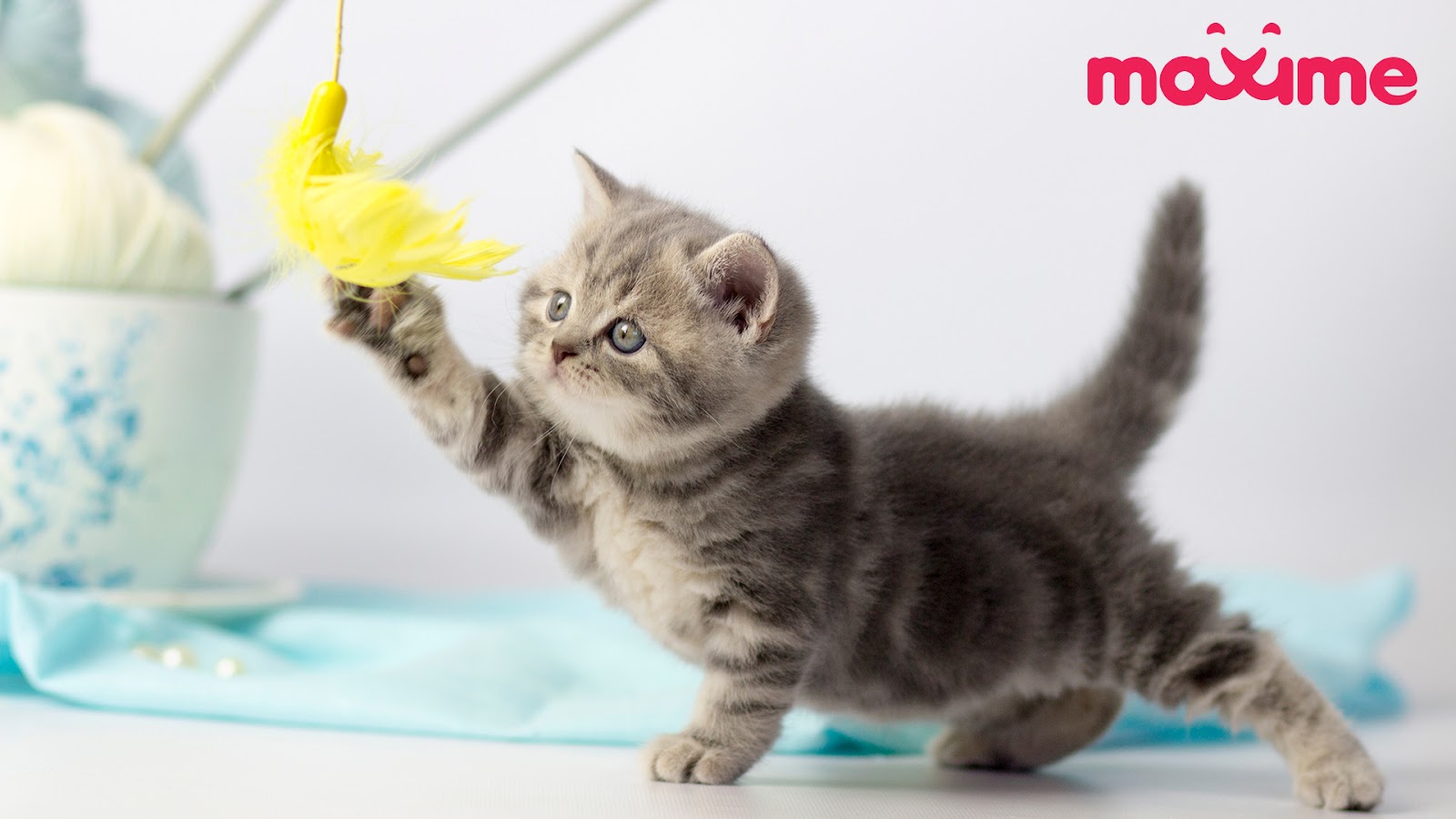
4 Tips to Help Keep Your Cat Happy Indoors
Cats are natural-born hunters, so it’s a common belief that our domesticated feline friends need to roam outside to live a happy and healthy life. But did you know that the great outdoors can cause more problems than benefits for your cattos? In fact, studies show that outdoor cats have a shorter lifespan and tend to live an average life of 2-5 years, compared to their indoor counterparts who live an average of 10-15 years.
While it is true that our cats can definitely get more enrichment outside, free-roaming outdoors exposes them to a multitude of risks too. Letting them out of the house can cause them to get hit by a vehicle, contact fleas and ticks, expose them to contagious feline diseases, be a victim of animal cruelty, and so much more.
As such, it’s generally recommended to keep your cats indoors. But you might be asking yourself next — isn’t it cruel to deny your cats the great outdoors? Worry not, paw-rent, that’s why we’re here! Here at Maxime, we’ve gathered our experts to consolidate these tips on how you can keep your indoor cat happy and healthy.
1. Tire your cat out with toys.
Whether you’re a seasoned cat paw-rent or a rookie, you’ve probably seen your floof baby do zoomies. Zoomies are caused by the excess/pent-up energy that our cats have gathered from snoozing all day.
Keep your cat moving while awakening the little hunter in them with a variety of awesome cat toys! Feather wands, fuzzy mice, rolling balls, and laser pointers are your friends to help keep your cat entertained and pouncing safely indoors.
2. Install bird-watching stations.
Cats love birds. As a cat paw-rent, you’ve probably seen your feline baby climb your windows (and wreak havoc on your curtains). Birds and other small animals are common prey to the domestic cats’ ancestors and many cats have retained this wildlife instinct.
Aside from these, the movement and chirping of birds just fascinate our dear cattos. Indulge their bird-watching habit by installing perches or hanging shelves by your windows.
3. It’s the cliiiimmmmmb!
Cats love to be in high places. It gives them a good vantage point to survey their surroundings and helps them stretch out those claws. In the wild, cats expertly climb trees to either chase or observe their prey or to hide from predators when they feel threatened.
Provide your kitties with a ready-made cat tree so they can exercise their climbing instincts. If you live in a multi-cat household, cat trees can also serve as a good place of rest and recreation for your cats. If a cat tree is not feasible, you can also explore installing climbing perches, hanging shelves, or wall-mounted hammocks for your feline friends.
4. Two kitties are better than one.
Despite their reputation for being independent and solitary animals, cats can become bored and lonely too when left alone for too long! This is why most experts recommend pet owners to adopt two cats instead of one. Two kitties can mentally stimulate each other, keep each other active, and generally keep each other entertained. Your feline companion needs its own companion, too! Plus, who can say no to having two cuddly, feline floof babies?
On top of these environment-enrichment tips, it’s important to keep your cats healthy by providing them with proper nourishment. Treat them to a yummy and minerally-balanced meal with Maxime Cat Food, which is enriched with taurine and formulated with easily digestible ingredients to help you #LiveTheBestLifeTogether with your feline babies!
Sources:
National Wildlife Federation
Web MD
Frequently Asked Questions
Q1: Why is keeping cats indoors generally safer despite their natural instinct to roam?
The lifespan difference between indoor and outdoor cats is stark — outdoor cats live an average of just 2 to 5 years, while indoor cats typically live 10 to 15 years. The outdoors exposes cats to vehicle collisions, fleas and ticks, contagious feline diseases, and animal cruelty, among other risks. While outdoor environments offer richer stimulation, the dangers significantly outweigh the benefits. The practical conclusion for responsible cat owners is that keeping cats indoors is the safer choice — provided the indoor environment is actively enriched to meet the cat’s physical and psychological needs.
Q2: What types of toys best satisfy an indoor cat’s natural hunting instincts?
Cats are instinctive hunters, and toys that mimic prey behavior are the most effective at channeling that drive productively. Feather wands simulate the erratic movement of birds, fuzzy mice replicate small ground prey, rolling balls trigger chase responses, and laser pointers engage pursuit instincts without requiring a physical target. The key is variety and active engagement — rotating between toy types prevents habituation and keeps sessions stimulating. Regular play also expends the pent-up energy that accumulates from daytime sleeping, reducing nighttime zoomies and destructive behaviors that arise from under-stimulation in confined environments.
Q3: Why do cats have such a strong attraction to windows and bird-watching, and how can owners use this constructively?
Cats retain the wildlife instincts of their predatory ancestors, for whom tracking small animals was a survival skill. Birds and small creatures trigger these deep-rooted responses — movement, sound, and unpredictability all capture feline attention in ways that static indoor environments cannot match. Rather than discouraging window fascination, installing perches or hanging shelves near windows gives cats a dedicated, comfortable vantage point that satisfies the bird-watching impulse safely. This simple environmental addition provides hours of passive enrichment at minimal cost, addressing both the prey-tracking instinct and the cat’s preference for elevated observation points.
Q4: Why do cats need vertical space, and what are the options for providing it indoors?
Height is not a luxury for cats — it serves real behavioral functions rooted in wild survival. Elevated positions provide a commanding view of the surrounding environment, satisfying the surveillance instinct. In multi-cat households, high spaces also offer retreat and personal territory, reducing competition and stress between animals. A purpose-built cat tree is the most comprehensive solution, combining climbing, scratching, and resting functions in one structure. For homes where a full cat tree is impractical, wall-mounted climbing perches, hanging shelves, or hammocks provide similar vertical enrichment with a smaller physical footprint.
Q5: Is adopting two cats genuinely better for feline wellbeing, or is this just a common assumption?
Despite their reputation for independence, cats are susceptible to boredom and loneliness when left alone for extended periods — particularly in purely indoor environments where stimulation is limited. Expert consensus favors adopting pairs, as two cats provide each other with consistent mental stimulation, physical play, social grooming, and companionship during the many hours owners are absent. This mutual engagement reduces stress-related behaviors like excessive vocalization, over-grooming, and destructive activity. The pairing works best when cats are introduced at a young age or matched carefully by temperament, but the enrichment benefits of feline companionship are well-supported by animal behavior research.
Related Stories

5 Steps Every Paw-rent Can Follow When Switching to New Dog Food
Thinking of changing the kind of food you feed your floof babies? Well, it won’t
Hoppin’ into Success: A Guide to Launching Your Rabbit Farming Venture
Are you considering a venture into rabbit farming in the Philippines? You’re in the right
Clucking Business: Unveiling the Types of Poultry Farming
Thinking of diving into the bustling world of poultry farming? Before you start hatching plans,