
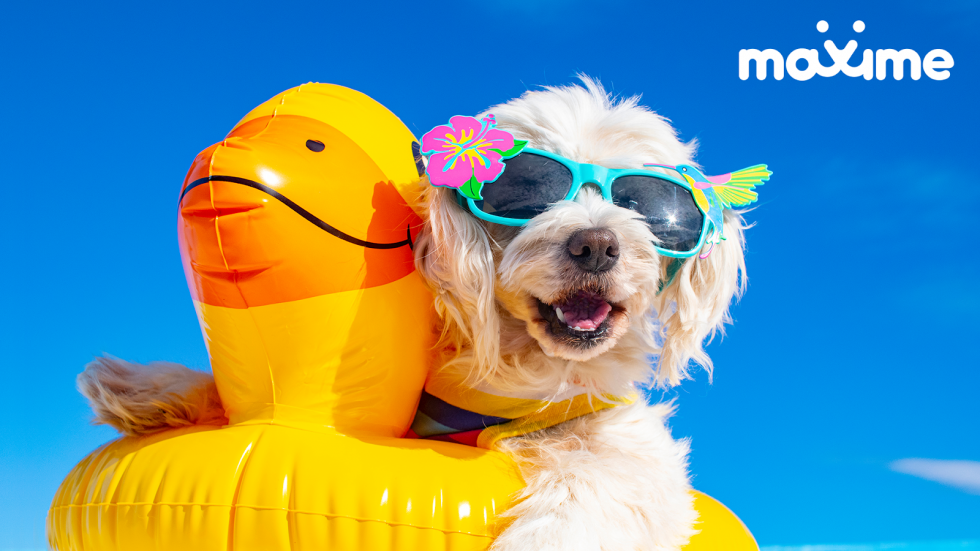
5 Tips to Get Your Dog Cool & Safe this Summer
For many, summertime means heading to the beach to have fun under the sun but for us paw-rents, this is a time for taking extra precautions to ensure that our furry friends stay comfortable and cool this season.
Luckily, we at Maxime have gathered expert tips to help you and your doggos have fun while staying safe from the sweltering heat! Read on to check out our tips below.
1. Provide plenty of fresh and clean water
Hydration is key! It goes without saying that giving enough fresh and clean water to your dog is a must but making sure to fill up your dog’s water bowl, especially during hot days, is always a top priority!
When you’re out for a walk or a short drive, remember to bring water and a portable bowl for your dog to drink from so they can stay hydrated.
2. Ice it up!
On particularly hot days, we reach for an ice cream tub or a popsicle. Here’s a little secret: did you know that your dog might love those too? Try making them a homemade fruit popsicle or frozen juice bar to snack on. Avoid feeding your dogs commercial or store-bought yogurt and ice cream as those might contain artificial sweeteners like xylitol, which could potentially harm your dog.
If fruit juice bars are not to your dog’s liking, go for their other favorite flavors! Try making frozen dog treats by freezing chicken broth in a popsicle mold. Additionally, ice cubes alone might do the trick in helping your dog cool down!
3. Find your dog a cool spot to rest on
Whether you prefer to keep your dogs strictly indoors or have them lounging around in the patio every now and then, make sure that they have a well-shaded area that they can comfortably rest on. Draw them away from direct sunlight and encourage them to stay on a cooling mat or place a damp towel on the floor for them to lie on.
4. Plan your walks
If the temperature outside is too warm for you, it’s probably the same for your furbaby too! Remember that your dog has direct contact with surfaces through their paws and a warm asphalt might be too uncomfortable for them.
Keep your dog cool while allowing them to get their daily exercise by going for an early morning or late evening walk. Take frequent breaks when needed and keep your walks short and sweet.
5. Practice regular grooming
Remember to be faithful to your furbaby’s regular grooming routine! Brush your dog’s coat and clip it to avoid knots and tangles, especially if your dog is of a particular hairy breed. Matting can trap heat, resulting in overheating for your canine friends.
Signs of heatstroke in dogs
Keep this in mind: if it’s too hot for you, it’s too hot for your pets as well. Some days are best spent indoors with a steady circulation of cool air around you.
Heatstroke can develop in dogs when they fail to regulate their body temperature. Heatstroke is fatal and can lead to neurological problems, kidney failure, and even death.
Be familiar with the signs and observe your furbaby properly.
Signs of a heatstroke include:
- Heavy panting
- Glazed eyes
- Excessive salivation
- Lack of coordination
- Vomiting or diarrhea
- Loss of consciousness
- Dark red or pale gums
If you suspect your dog is suffering from a heatstroke, immediately transfer them to a cooler environment and contact your veterinarian. Apply damp towels soaked in cold water to their head, neck, and chest. You can also rinse their mouth with water to help them cool faster. Never place them directly into ice-cold water as this might cause them to go into shock.
If your dog’s temperature goes above 104 degrees (40 degrees Celsius), remember that this is a sign for you to decrease activity and help them cool down. We recommend bringing a digital thermometer and taking your pup’s temperature just to be sure.
Ensuring the safety and well-being of your fur baby is a part of being a responsible dog owner. The above tips can help you and your dog continue to have fun under the sun despite the longer and warmer days!
If you have any questions or concerns about your dog’s health, especially in the summer, always consult your trusted veterinarian.
References:
Battersea
Pet Health Network
Canine Journal
Frequently Asked Questions
Q1. What are the five tips for keeping dogs safe and comfortable during summer?
Five practical measures are recommended. First, provide plenty of fresh, clean water at all times and carry a portable bowl on walks or drives. Second, offer frozen treats such as homemade fruit popsicles or chicken broth frozen in a popsicle mold – avoiding store-bought ice cream that may contain xylitol. Third, ensure a well-shaded resting area indoors or outdoors, using a cooling mat or damp towel on the floor. Fourth, schedule walks during early morning or late evening to avoid hot surfaces. Fifth, maintain regular grooming to prevent coat matting, which traps heat and can cause overheating.
Q2. Why is xylitol dangerous for dogs, and which summer treats should owners avoid giving them?
Xylitol is an artificial sweetener commonly found in commercial yogurt, ice cream, and many processed food products that is toxic to dogs even in small quantities. It can cause a dangerous drop in blood sugar and serious liver damage. During summer, when owners are naturally inclined to share cold treats with their pets, the risk of accidental xylitol exposure increases. The safe alternative is to make frozen treats at home using dog-safe ingredients – fruit juice bars made from dog-safe fruits, or chicken broth frozen in a popsicle mold, are both practical and completely controllable in terms of ingredients.
Q3. What are the warning signs of heatstroke in dogs, and what should owners do immediately if they observe them?
Seven heatstroke warning signs are identified: heavy panting, glazed eyes, excessive salivation, lack of coordination, vomiting or diarrhea, loss of consciousness, and dark red or pale gums. Heatstroke develops when a dog can no longer regulate its body temperature and is described as fatal – capable of causing neurological problems, kidney failure, and death. If heatstroke is suspected, the dog should be moved immediately to a cooler environment, damp towels soaked in cold water applied to the head, neck, and chest, and the mouth rinsed with water. A veterinarian must be contacted immediately. Immersing the dog directly in ice-cold water must be avoided as it can cause shock.
Q4. At what body temperature should a dog owner take action, and what is the recommended way to monitor this?
A dog body temperature exceeding 104 degrees Fahrenheit – equivalent to 40 degrees Celsius – is confirmed as a threshold at which activity should be reduced and cooling measures actively applied. Carrying a digital thermometer on walks or outdoor outings is specifically recommended as a practical way to monitor body temperature and respond before a situation becomes an emergency. This temperature guideline gives owners a concrete, measurable reference point rather than relying solely on behavioral observation, which can be ambiguous in the early stages of heat stress when a dog may appear only mildly uncomfortable.
Q5. What are the key takeaways for dog owners about summer safety and heat management?
Three principles stand out. First, prevention is far simpler than treatment – adjusting walk timing, providing shade, maintaining hydration, and practicing grooming are all low-cost daily habits that eliminate most summer heat risk before it becomes a veterinary emergency. Second, the owner’s comfort level is a useful proxy – if the heat feels excessive to a person, it is almost certainly dangerous for a dog, which has limited ability to cool itself through sweating and relies primarily on panting. Third, heatstroke requires immediate action, not observation – any combination of the seven warning signs should trigger an immediate response and veterinary contact without delay.
Related Stories

Balut Variety: Exploring the Different Kinds of Fertilized Duck Eggs
Balut is a fertilized duck egg eaten in the Philippines, but it’s not just

20 Biosecurity Measures para sa inyong babuyan
Panatilhing ligtas sa sakit ang inyong mga alagang baboy gamit ang 20 #M3Time Biosecurity Measures

Nurturing Sustainability: Pilmico’s Commitment to Eco-Friendly U.S. Soy
INTRODUCTION: As a company committed to sustainability, we proudly champion sustainably grown U.S. Soya as