
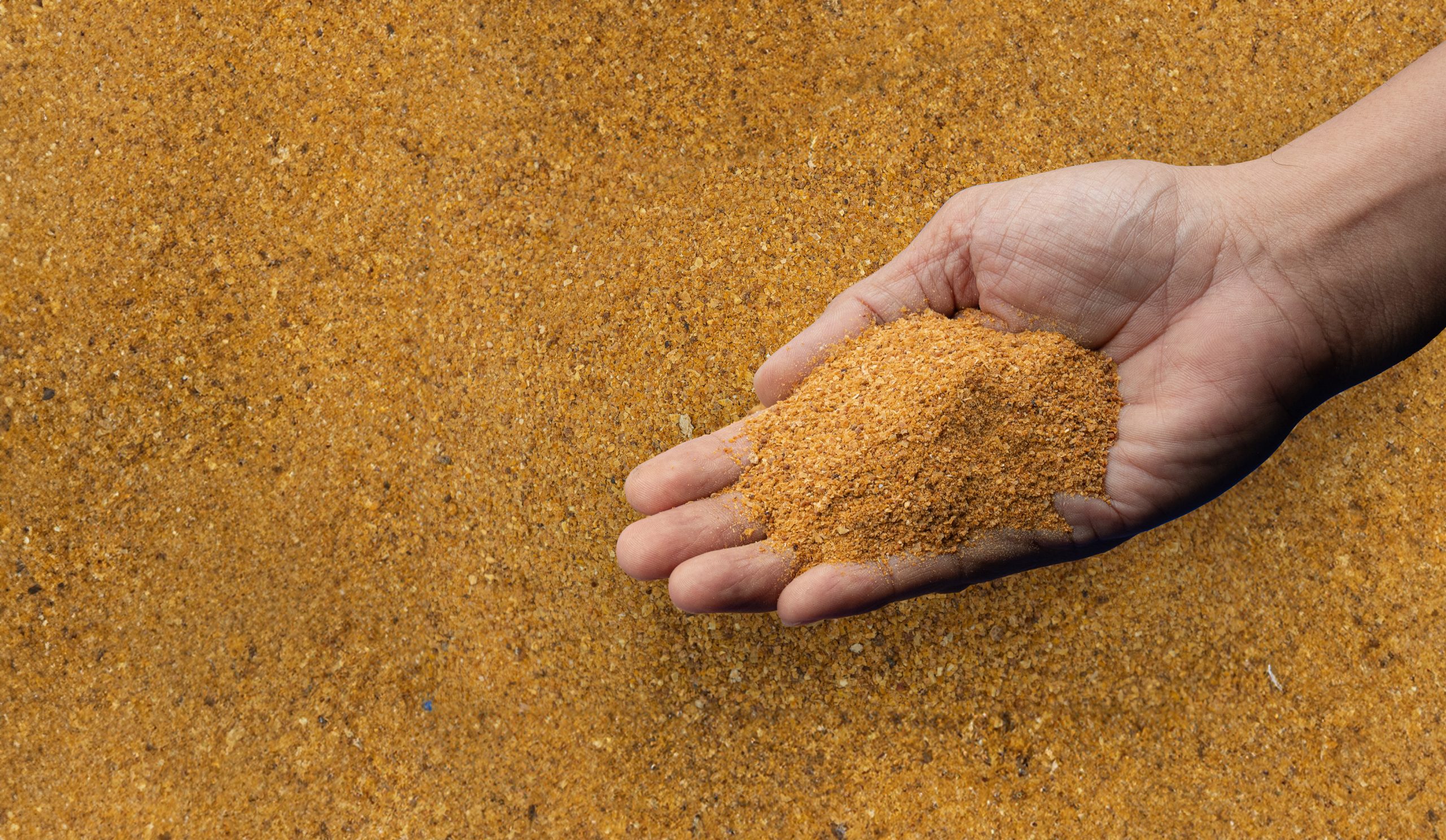
A By-Product Turned Essential Feed Ingredient
The Industrial Revolution transformed global production, giving rise to countless by-products—some discarded, others repurposed. Among these is Corn Distillers Dried Grains with Solubles (DDGS), a co-product of ethanol production that has steadily gained prominence in animal nutrition. Since the late 1990s, DDGS has proven to be an efficient and cost-effective alternative feed ingredient, particularly in markets like the Philippines, where imports surged between 2011 and 2013.
The Evolution of DDGS in Feed
The use of wet distillers grains (WDG) in animal diets dates back to the 1970s in the United States, initially benefiting ruminants. However, the ethanol boom of the 1990s—driven by fuel price hikes and environmental policies—led to a surge in ethanol production, yielding vast quantities of WDG. Drying techniques soon transformed WDG into dried distillers grains (DDG), facilitating transport and storage while expanding its application across livestock species.
By the early 2000s, U.S. ethanol production accelerated with the Renewable Fuel Standard (RFS), significantly increasing DDGS availability. Ongoing research further validated its nutritional value for swine, poultry, and aquaculture, boosting global demand. Countries such as Mexico, China, South Korea, Vietnam, and Canada became major importers. The Philippines followed suit, integrating DDGS into its feed industry by 2011 and becoming a leading importer in Southeast Asia by 2019. Pilmico, for instance, has been incorporating DDGS into its formulations since 2014.
Nutritional Advantages and Challenges
DDGS is recognized for its rich nutrient profile, providing energy, protein, fat, and fiber—making it a viable substitute for costlier ingredients like corn and soybean meal. Extensive research has supported its inclusion in various livestock diets:
- Swine: Inclusion rates of 10-20% demonstrated no adverse effects on growth rates or feed conversion ratios (FCR).
- Poultry: Broilers and layers exhibited consistent performance in terms of average daily gain (ADG), FCR, and egg production.
- Aquaculture: Studies on tilapia and catfish indicated that 10-20% inclusion maintained weight gain and FCR, while shrimp and salmon required more moderate levels of 10-15%.
Despite its benefits, DDGS presents challenges in nutrient digestibility and amino acid variability. Fluctuations in nutrient composition—stemming from differences in ethanol production techniques—can lead to inconsistent animal performance. However, advancements in fermentation and drying processes have improved DDGS standardization, enabling precise diet formulation.
Sustainability and the Future of DDGS
Sustainability concerns in livestock production have further highlighted the value of DDGS. Compared to traditional protein sources like soybean meal and fishmeal, DDGS offers a lower carbon footprint. Though emissions arise from grain cultivation, processing, and transport, DDGS represents a sustainable model by repurposing an industry by-product into a valuable feed component. Additionally, studies suggest that DDGS in animal diets can help reduce methane emissions from manure, further strengthening its environmental appeal.
Overcoming Adoption Barriers
While DDGS adoption has grown, several challenges remain:
- Nutrient Variability: Differences in processing techniques lead to inconsistencies in amino acid profiles and digestibility.
- Analytical Variability: Laboratory testing methods can yield divergent results, emphasizing the need for standardized evaluation protocols.
- Market Awareness: Expanding research and education efforts can help producers confidently incorporate DDGS into formulations, especially as animal genetics and nutritional requirements evolve.
Addressing these challenges requires a more precise approach to feed formulation. Pilmico’s Gamefowl Nutrition Manager, Jennifer Juanillas highlights a practical solution: “Using actual lab test results to generate a full nutrient profile allows us to narrow the gap between the ideal and theoretical nutrient profile of DDGS.”. She further explains, “In this way, the gap from the ideal or theoretical nutrient profile of DDGS is narrowed, ensuring the target nutrient specifications of final feed formulas remain intact and animal performance is not disrupted.”
Looking Ahead
With its strong nutritional profile, expanding research, and increasing market acceptance, DDGS is poised to remain a staple in livestock and poultry feeds. Technological advancements continue to refine its processing, while sustainability benefits make it an attractive alternative for feed manufacturers worldwide. As animal nutritionists gain deeper insights into DDGS’s capabilities, its role in modern feed strategies will only grow, reinforcing its position as a key component in global feed production.
Frequently Asked Questions
Q1: What is DDGS and how did it become a mainstream feed ingredient?
Corn Distillers Dried Grains with Solubles (DDGS) is a co-product of ethanol production — the nutrient-rich residue left after starch is extracted from corn for fuel. Initially a niche ingredient used in ruminant diets from the 1970s, its availability surged alongside the U.S. ethanol boom of the 1990s. Improved drying techniques made it easier to transport and store, while growing research validated its nutritional value across swine, poultry, and aquaculture — transforming what was once an industrial by-product into a globally traded feed ingredient.
Q2: At what inclusion rates does DDGS perform effectively across different livestock species?
Research has established practical inclusion guidelines across major species. For swine, rates of 10 to 20% showed no adverse effects on growth or feed conversion. Broilers and layers demonstrated consistent performance in daily gain, feed conversion, and egg production at comparable inclusion levels. Aquaculture species such as tilapia and catfish tolerated 10 to 20% inclusion without compromising weight gain, while shrimp and salmon required more conservative levels of 10 to 15% due to their more sensitive digestive systems. These ranges give nutritionists a reliable framework for cost-effective formulation across different species.
Q3: What are the main challenges that limit DDGS adoption in feed formulation?
The primary challenge is nutrient variability — DDGS composition fluctuates depending on the corn source, fermentation process, and drying technique used by the producing ethanol plant. This inconsistency in amino acid profiles and digestibility can translate into unpredictable animal performance if formulators rely solely on average or theoretical nutrient values. Divergent results from different laboratory testing methods compound the problem. The practical solution is to use actual laboratory test results for each batch rather than generic database values, allowing formulators to build accurate nutrient profiles and maintain target feed specifications despite batch-to-batch variation.
Q4: How does DDGS contribute to sustainability in livestock production?
DDGS embodies the circular economy principle by converting an industrial by-product — material that would otherwise require disposal — into a productive nutritional input. Compared to primary protein sources like soybean meal and fishmeal, DDGS carries a lower carbon footprint because its production emissions are shared with the ethanol process rather than attributed entirely to feed. Additionally, research suggests that including DDGS in animal diets can reduce methane emissions from manure, adding an environmental benefit that extends beyond the feed ingredient’s own production chain and strengthens its case for inclusion in sustainability-focused feed strategies.
Q5: What is the key takeaway for feed formulators working with DDGS today?
DDGS is no longer an experimental or secondary ingredient — decades of research, widespread commercial adoption, and continued improvements in processing standardization have established it as a reliable, cost-effective component of modern feed formulations. However, realizing its full value requires moving beyond generic nutrient tables. Batch-specific laboratory analysis is essential to narrow the gap between theoretical and actual nutrient profiles, ensuring that feed specifications and animal performance remain consistent. As genetics, nutritional science, and sustainability pressures all evolve, DDGS is well positioned to play an increasingly important role in global feed strategy.