
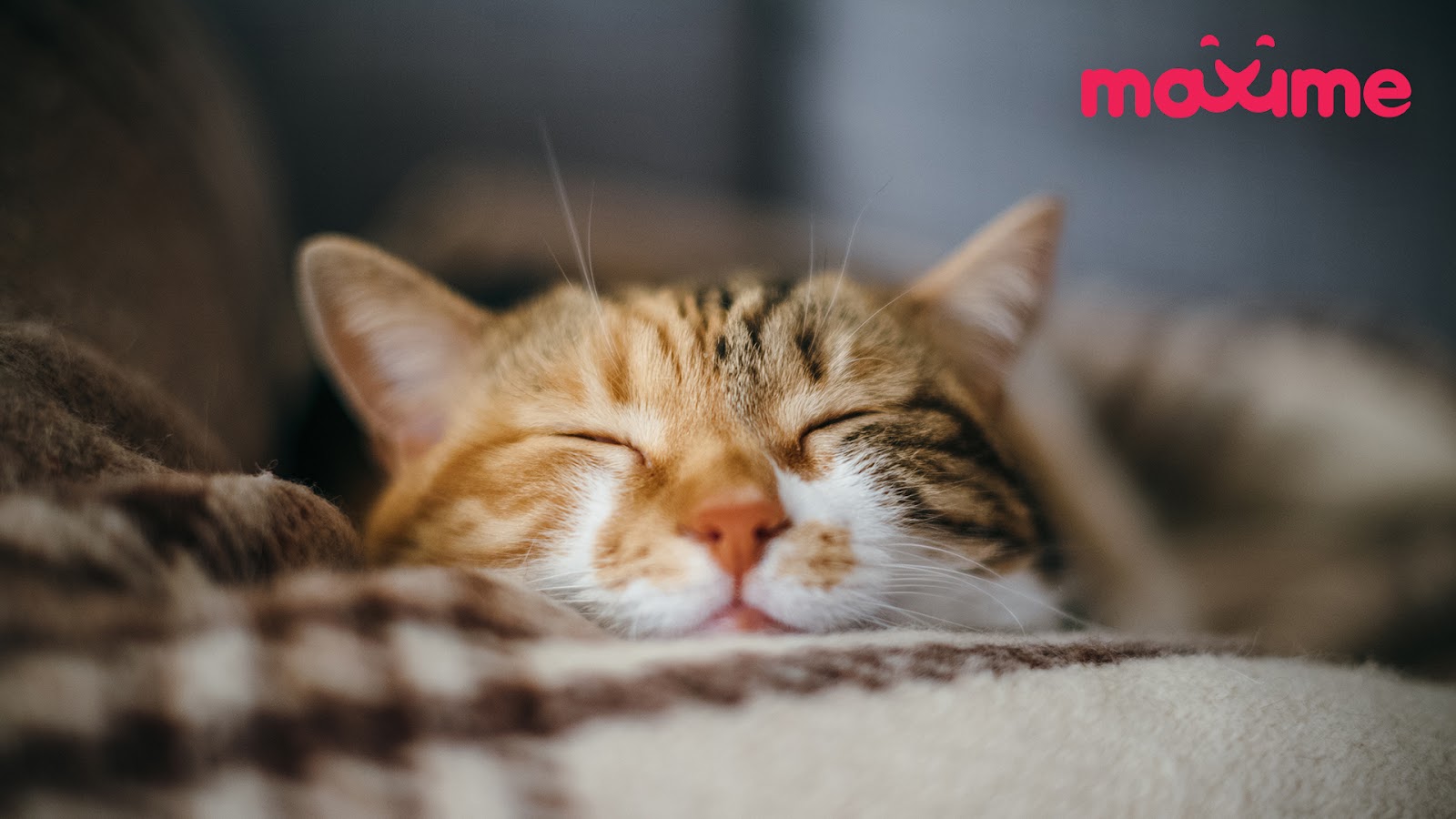
How to Get Your Cat to Sleep at Night
Picture this: you’re already tucked in for the night — your catto snuggled warmly against your feet — when suddenly, you feel movement. The next thing you know, your cat has already hopped off the bed and has resorted to running around the room, suddenly finding everything amusing despite the dark.
Does this scenario sound too familiar to you?
If the answer is yes, you’ve probably experienced getting woken up by your little meow-meow in the middle of the night at least once. Our cattos can be the cutest creatures but they can also turn into the most troublesome ones, especially if they’re disrupting our precious slumber.
Luckily for you, we’ve consulted our team of experts here at Maxime and gathered some simple tips on how you can get your cat to sleep at night.
Why is your cat up at night?
Cats follow a different biological clock compared to humans. Unlike us, who are diurnal creatures (which means we’re awake during the day and rest during the night), cats are crepuscular, which means they are primarily active during dawn and dusk.
Most desert animals like lions, bobcats, coyotes, and rabbits are crepuscular because the twilight period allows them to escape the heat of midday while hunting for their prey.
Many domesticated cats evolved from the African wildcat — a desert-dwelling animal. While our fluffy, house cattos no longer have to hunt for dinner (thanks to us, paw-rents!), they still retained the behaviors of their ancestors, which explains their nighttime activity.
How to get your cat to sleep at night
If your floof baby is disrupting your beauty sleep, don’t lose hope! Just like dogs, cats are routine animals, which means we can train them to change their routine in order to have the same sleeping schedule that we have.
Here are some things you can do to get your catto to snooze at night.
1. Dedicate a period for playtime.
Cats tend to sleep for at least 15 hours during the day, then burn off all that pent-up energy through zoomies during the night. If your floof baby keeps having zoomies at 3:00 AM, maybe it’s time to amp up your play sessions with them during the early evening hours.
Similar to how humans turn into bed early after a long and physically strenuous day, there’s no better way to get our cats to sleep earlier than to tire them out. Keep them engaged by playing with them; try a combination of enriching toys such as laser pointers, feather wands, or fetch. The longer you play with them, the more likely for them to get exhausted and sleep at the same time as you.
2. Feed your cat a small meal before bedtime.
You’ve managed to get kitty tired after their exercise, now, what’s next? Feed your catto a small meal before bed. Cats tend to fall asleep faster right after getting their tummies full.
If your cat is the type to ask for a midnight snack before bed, you can leave them a small bowl filled with their favorite Maxime kibbles before getting settled for bedtime.
3. Be patient and ignore your cat as needed.
After doing steps 1 and 2, your next best course of action is to ignore them, no matter how cute they look or sound. If you answer to their every demand, especially if the demand involves feeding them or playing with them in the middle of the night — congratulations! You have now been trained by your cat and not the other way around.
The key is to establish a routine that will be beneficial for both you and your cat. And remember to exercise patience: newborn kittens may take a while to develop this habit and adult cats who have been newly adopted adult cats may also take time to unlearn certain behaviors.
With time and patience at your disposal, it’s still possible for you to enjoy a good night’s sleep together with your catto! Don’t forget to treat them to a yummy and minerally-balanced meal with Maxime Cat, enriched with taurine and available in delightful tuna and salmon flavors to help you #LiveTheBestLifeTogether with your floof babies!
References:
BBC Science Focus
Pet MD
Frequently Asked Questions
Q1: Why are cats naturally active at night, and is this behavior normal?
Nighttime activity in cats is rooted in biology, not misbehavior. Cats are crepuscular animals — naturally most active during dawn and dusk — a trait inherited from their desert-dwelling ancestors, including the African wildcat. In the wild, twilight activity allowed these animals to hunt while avoiding midday heat. Domesticated cats retain these instincts even though they no longer need to hunt for food. Understanding this biological basis helps owners approach nighttime disruptions with patience rather than frustration, recognizing that the behavior is instinctive and manageable through consistent routine-building rather than punishment.
Q2: How does evening playtime help shift a cat’s sleep schedule?
Cats typically sleep 15 or more hours during the day, accumulating energy that gets released as bursts of activity — commonly known as zoomies — during the night. Scheduling dedicated, vigorous play sessions in the early evening hours helps discharge that pent-up energy before bedtime. Interactive toys like laser pointers, feather wands, or fetch games are effective because they mimic hunting behavior, engaging a cat’s instincts fully. The physical exhaustion from an extended play session makes cats significantly more likely to settle down and sleep in sync with their owner’s schedule.
Q3: Does feeding time affect when a cat falls asleep?
Yes — meal timing is a practical tool for influencing sleep behavior. Cats tend to become drowsy after eating, mirroring the post-meal rest patterns seen in many animals. Offering a small meal immediately after an evening play session takes advantage of this natural sequence: physical exertion followed by feeding creates the ideal conditions for your cat to wind down and sleep. Leaving a small portion of food accessible at bedtime also preempts midnight hunger, reducing the likelihood of a cat waking its owner to demand a late-night snack.
Q4: What is the biggest mistake cat owners make when trying to adjust their cat’s sleep routine?
The most counterproductive habit is responding to nighttime demands — whether meowing, pawing, or other attention-seeking behavior — by feeding or playing with the cat. Each response inadvertently rewards the behavior, reinforcing the cat’s understanding that nighttime disruption produces results. Over time, this trains the cat to escalate rather than reduce nighttime activity. The more effective approach is consistent, deliberate ignoring of demands outside the established routine. This is admittedly difficult, especially with persistent or vocal cats, but maintaining boundaries is what allows a new, mutually beneficial sleep schedule to take hold.
Q5: How long does it realistically take to retrain a cat’s sleep habits, and does age affect the process?
There is no fixed timeline — results depend on the individual cat’s temperament, age, and history. Kittens are still developing behavioral patterns and may take longer to establish consistent nighttime sleep simply due to developmental energy levels. Newly adopted adult cats often arrive with ingrained habits from previous environments and may need time to unlearn them before responding to a new routine. The consistent factor across all cases is patience: results come from repeating the play-feed-ignore sequence nightly without deviation, giving the cat time to associate the new routine with expected outcomes.
Related Stories

Biosecurity in Poultry: Rainy Season Preventive Measures
The rainy season can be a challenging period for poultry farmers. The increased humidity and

5 Steps Every Paw-rent Can Follow When Switching to New Dog Food
Thinking of changing the kind of food you feed your floof babies? Well, it won’t

Pilmico Brings Customers and Animal Nutrition Experts Together at Poultry 365 Symposium
Pilmico Animal Nutrition Corporation (Pilmico), a subsidiary of Aboitiz Foods, hosted the “Poultry 365” symposium