
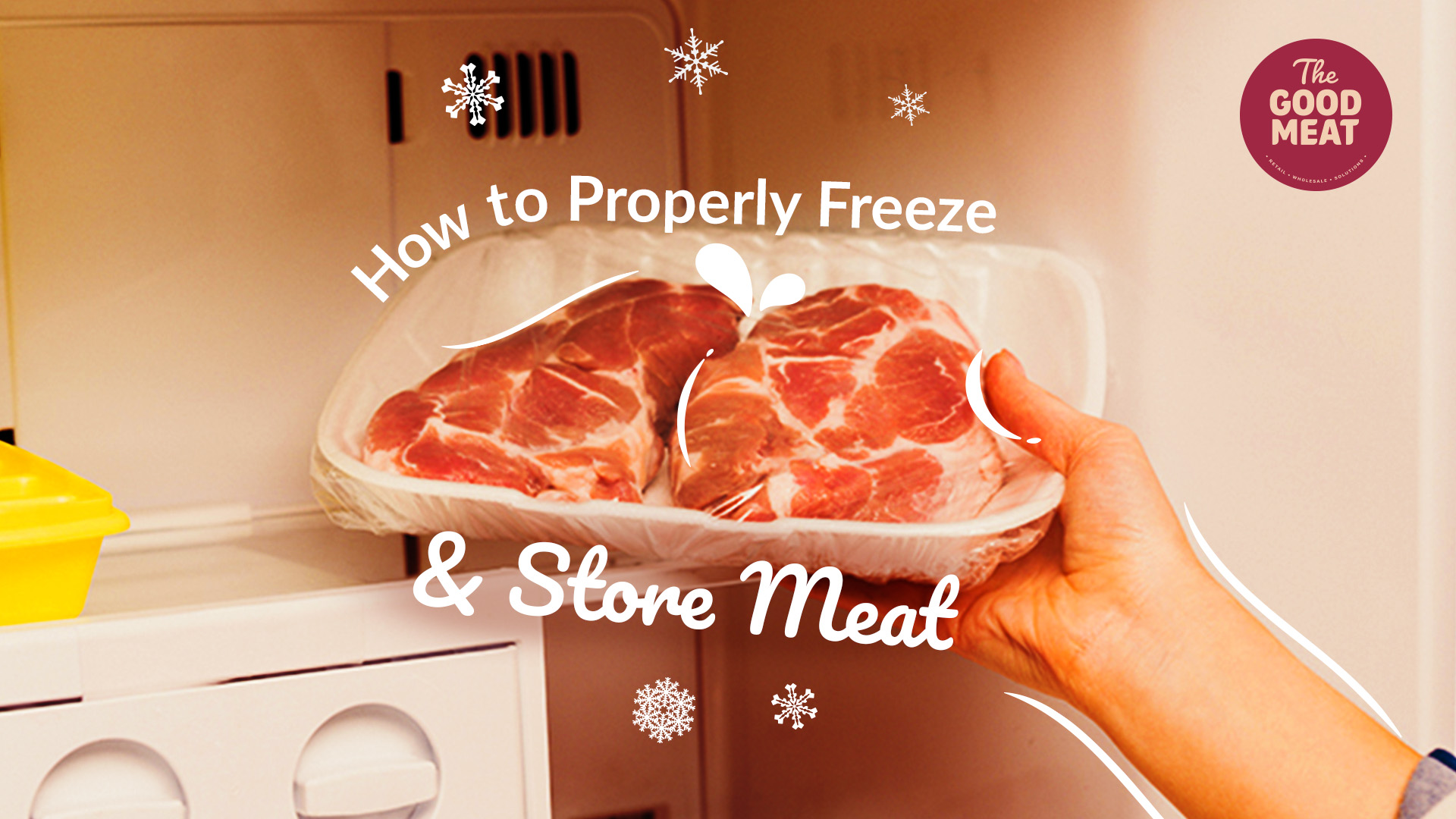
How To Properly Freeze & Store Meat
Meat will always be part of every Filipino’s family meal. To ensure our family and loved ones get the best meal on their plates, a reliable and good supplier of fresh produce, especially meats, must be your top priority.
Fresh meats can be bought from the wet market, local grocery, or meat stores, but due to the pandemic, these can now be conveniently bought online and directly delivered to the safety of our homes.
It is practical to buy meat based on your household needs and storage areas such as refrigerator and freezer availability and capacity. Living in a tropical country, fresh meat is highly perishable if left out for too long in the heat. This needs to be stored properly to maintain its freshness, keep it safe from bacteria growth, and prevent unnecessary spoilage.
Tips For Freezing Meat
When the meat reaches our houses, we either cook it directly or store it in the refrigerator if it’s going to be cooked soon. If the meat will not be used immediately, it is recommended to freeze the meat right away to extend its shelf life. This is one of the best ways to preserve its freshness, but we need to do it properly.
It is advisable to wash them using running water to remove physical impurities and to cut the meat based on the recipes in mind. Portion the meats and pack them in separate containers based on the recipe and cooking schedule. This will prevent thawing a large amount of meat and refreezing some parts, which can cause spoilage or bacteria to grow.
Not sure whether to keep your meats in the refrigerator or the freezer? A good rule of thumb is that your freezer is ideal for longer storage. As for your refrigerator, you can set down your meats here if you intend to cook them immediately after buying them. This is also where you will place your meats when you need to defrost or thaw them overnight so that they’re ready to cook the next day.
Tips For Storing Meat
Refrigerator and Freezer? Check. Clean Meat? Check. Now, where can you store them? You can use foil, plastic wrap, and airtight containers to store frozen meat. Airtight containers prevent freezer burn, which is when meat develops white, dried-out patches as air comes into contact with the meat surface. Freezer burn is a condition we don’t want our meat to be in; it means drying or loss of moisture and palatability of the meat.
Once it’s clean and properly packed, you can now freeze your meat. Remember not to overload the freezer and the refrigerator, as cool air cannot flow properly, and uniform cooling will not be achieved.
Keep in mind that you can generally freeze meats for up to 4 months or even more, but this will all depend on what type of meat you will store. However, to stay on the safe side, one thing every meat lover should practice is to always look at the expiration dates or sell-by dates listed on the pack.
Practicing proper storage and freezing of meat keeps it safe for family consumption. This gives you the confidence to prepare safe and quality dishes for your loved ones.
References:
Meat Storage. The Meat We Eat. Retrieved May 19, 2022, from American Meat Science Association
Tools and Tips for Freezing Food so Nothing Goes to Waste. May 6, 2020. WireCutter. Retrieved May 19, 2022 from New York Times
Frequently Asked Questions
Q1: How does living in a tropical climate like the Philippines make proper meat storage not just a preference, but a necessity?
In a hot, humid environment, fresh meat left at room temperature becomes a breeding ground for bacteria within hours. Unlike cooler climates where brief exposure is tolerable, tropical heat accelerates spoilage dramatically. For Filipino households, this makes proper refrigeration and freezing non-negotiable — not merely a best practice. The moment meat arrives home, the clock is running. Immediate refrigeration or freezing is the only reliable defense against bacterial growth, moisture loss, and food safety risks that the local climate amplifies.
Q2: Why does portioning meat before freezing have a direct impact on both food safety and household efficiency?
Portioning meat according to planned recipes before freezing prevents one of the most common storage mistakes — thawing more than needed and then refreezing the remainder. Refreezing partially thawed meat creates conditions for bacterial growth and accelerates spoilage. Beyond safety, pre-portioned packs aligned to specific meals reduce preparation time, minimize waste, and make weekday cooking more efficient. It is a discipline that pays dividends every time a meal is prepared, transforming freezer management into a practical system rather than an afterthought.
Q3: What exactly is freezer burn, and why does it signal more than just a cosmetic problem with stored meat?
Freezer burn occurs when air contacts the surface of frozen meat, causing white, dried-out patches to form. While it does not make meat unsafe to eat, it signals a loss of moisture and deterioration in texture and palatability. The meat becomes dry and less flavorful, compromising the quality of any dish prepared with it. Proper storage in airtight containers or tightly sealed wrapping is essential to preventing freezer burn and ensuring that frozen meat delivers the same quality as when it was first purchased.
Q4: What is the practical difference between using a refrigerator and a freezer, and when should each be chosen for meat storage?
The refrigerator is suited for short-term storage — meat that will be cooked within a day or two of purchase. It is also the correct environment for thawing frozen meat overnight before cooking. The freezer, on the other hand, is designed for longer preservation, extending the shelf life of meat for up to four months or more depending on the type. Choosing the wrong storage environment — such as keeping meat in the fridge when it will not be used for weeks — significantly shortens its usable life.
Q5: Beyond temperature, what overlooked habits most commonly undermine even the most well-intentioned meat storage efforts?
Two of the most overlooked habits are overloading storage units and ignoring expiration dates. Overfilling a refrigerator or freezer restricts airflow, preventing uniform cooling and creating warm pockets where bacteria can thrive. Separately, failing to check sell-by or expiration dates before consuming stored meat is a risk that even careful storers fall into. Combining proper packing, portioning, airtight sealing, and date-checking creates a comprehensive storage practice — one where no single habit is sufficient on its own, but all together ensure meat remains safe and high-quality for family meals.
Related Stories
The Five Delicious Dishes for Your Noche Buena
Noche Buena has been one of the most significant celebrations globally, especially for Filipinos. Filipino

Tips On Having The Best Summer Cookout
Summer is finally here! We Filipinos beat the heat by hitting the beach or going

Hoppin’ into Success: A Guide to Launching Your Rabbit Farming Venture
Are you considering a venture into rabbit farming in the Philippines? You’re in the right