
Empowering hog raisers: Pilmico and DSWD support farmers through Hog Raising Program
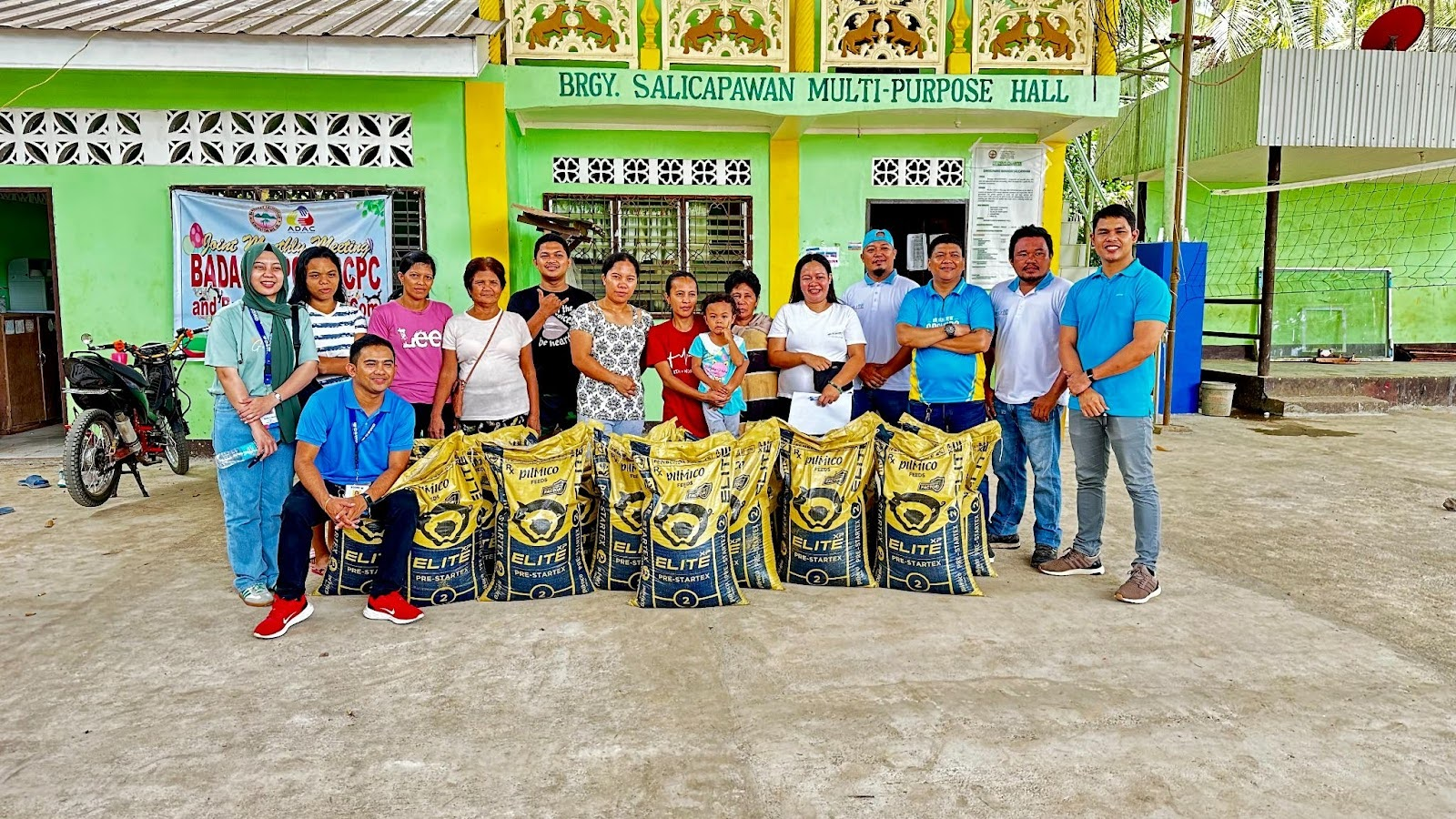
Pilmico Animal Nutrition Corporation (Pilmico) continues to fulfill its promise of being a total solutions provider to their customers. In collaboration with the Department of Social Welfare and Development (DSWD), Pilmico participated in the Sustainable Livelihood Program Association (SLPA) Hog Raising Program event held in Misamis Oriental.
Fourteen beneficiaries from Barangay Salicapawan, Kinoguitan, Misamis Oriental received two piglets each as well as Elite XP Hog Feeds. The beneficiaries were also given access to hog-raising seminars and technical assistance from Pilmico’s animal nutrition specialists.
This initiative is part of Pilmico’s Diamond Program, which focuses on four key pillars:
(1) Providing excellent nutrition and feeding; (2) Enhancing breeding and genetics; (3) Implementing good management practices; and (4) Ensuring complete healthcare.
Pilmico, an Aboitiz Foods company, is one of the top food and agribusinesses in the Philippines. It enables the growth of its stakeholders through consistent quality products and unmatched supporting services. As part of Aboitiz Foods, Pilmico is committed to nourishing the future by promoting sustainable livelihoods of hog raisers and empowering the swine industry.
Frequently Asked Questions
Q1: What is the DSWD Sustainable Livelihood Program and who does this initiative target?
The Department of Social Welfare and Development’s Sustainable Livelihood Program Association (SLPA) supports vulnerable communities in building viable, long-term income sources. The hog raising component targets smallholder families in Barangay Salicapawan, Kinoguitan, Misamis Oriental — a rural community in Mindanao where livestock raising represents a practical and accessible livelihood pathway. By pairing government social welfare infrastructure with private sector agribusiness expertise, the initiative reaches beneficiaries who would otherwise lack access to quality livestock inputs and professional technical guidance.
Q2: What did the 14 beneficiaries in Kinoguitan actually receive from the program?
Each of the 14 beneficiaries received two piglets and a supply of Elite XP Hog Feeds — giving them both the animals and the nutritional foundation to begin raising hogs immediately. Beyond the physical inputs, they gained access to hog-raising seminars and ongoing technical assistance from animal nutrition specialists. This combination of livestock, feed, training, and professional support addresses the full starting requirements of a new hog raiser, rather than providing animals alone and leaving beneficiaries to navigate the rest independently.
Q3: What are the four pillars of the Diamond Program and why do they matter together?
The Diamond Program is built on four interdependent pillars: excellent nutrition and feeding, breeding and genetics enhancement, good management practices, and complete healthcare. Each addresses a distinct dimension of swine production performance — and each is necessary for the others to function effectively. Superior nutrition without proper health management leaves herds vulnerable to disease. Strong genetics without sound management fails to convert genetic potential into actual performance. The four-pillar model ensures beneficiaries receive a complete operational framework, not just isolated inputs that deliver partial results.
Q4: Why is combining government social welfare programs with private sector agribusiness expertise effective?
DSWD brings reach, community trust, and established beneficiary networks into underserved communities that private companies cannot easily access independently. Pilmico brings product quality, nutritional science, and technical specialist capacity that government programs typically lack. Together, they close the gap between social protection and productive economic empowerment — the government identifies and supports eligible beneficiaries while the private partner ensures those beneficiaries have the tools, knowledge, and ongoing support to succeed. Neither partner alone could deliver the same complete intervention at comparable scale and effectiveness.
Q5: What is the broader takeaway about building sustainable livelihoods in rural agricultural communities?
Transferring livestock and feed to smallholder farmers is a starting point — not a complete solution. Without accompanying technical education, ongoing specialist support, and a structured management framework, initial inputs are likely to underperform or fail entirely. Sustainable livelihood programs in agriculture succeed when they treat beneficiaries as developing producers who need knowledge transfer, not just asset transfer. The model demonstrated here — animals, feed, training, and technical access delivered together as a package — reflects a more rigorous understanding of what genuine economic empowerment in rural farming communities actually requires.
Related Stories
Pilmico’s FINS Technology
For Pilmico Aquafeeds, we make sure to improve with the industry’s advances, while still being

Safety Through Synergy: Pilmico and Iligan Emergency Teams Unite for 2025 SimEx
On March 28, 2025, Pilmico, an Aboitiz Foods company, conducted its annual Simulation Exercise (SimEx),

The Basics of Feline Nutrition
We want our feline friends to live a long life. And to ensure that they