
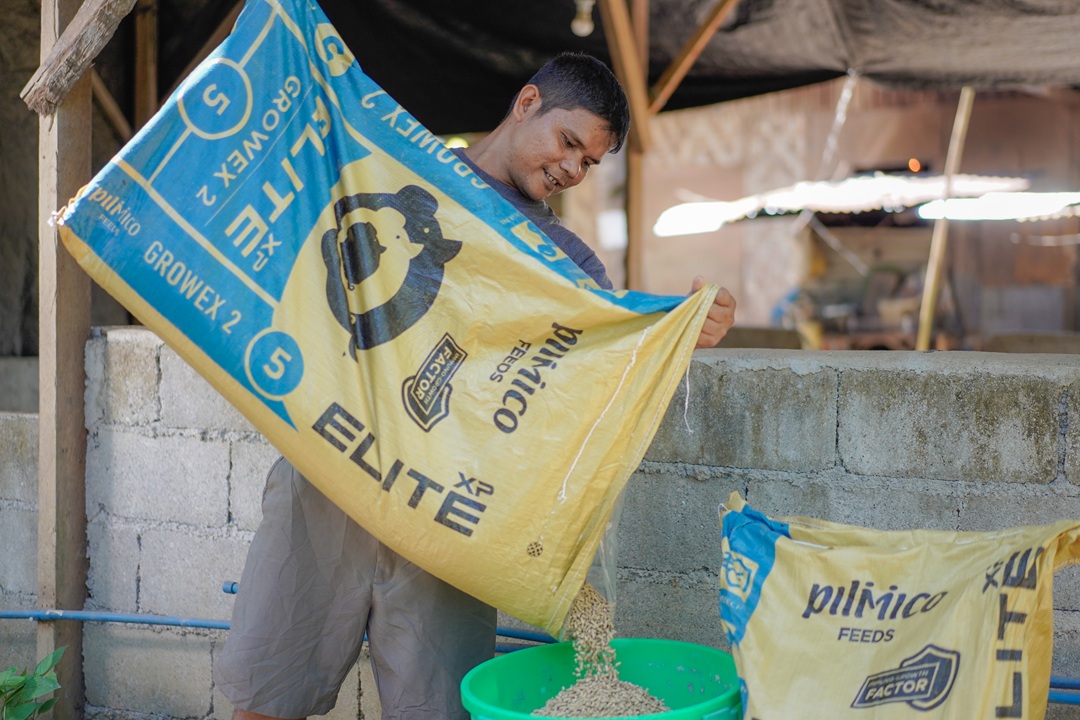
Effective feeding is crucial for animal welfare and financial success in farming. For both swine and poultry, a well-managed feeding program promotes growth, minimizes waste, and helps prevent common health issues. More than just a routine, feeding is a vital component of animal care.
Here are four key principles to help you feed like a pro:
1. Match the Feed to the Animal’s Stage
Young animals have underdeveloped digestive systems, making them less capable of handling heavy, fibrous ingredients. That’s why feeds provided during the early stages are made to be more nutrient-dense and easier to digest. Some raisers try to cut costs by skipping starter or creep feeds and jumping straight to grower diets meant for older animals. While this may seem economical at first, it often leads to poor digestion, stunted growth, and higher veterinary costs in the long run.
As animals grow, they begin to consume more feed by volume, so their diets are gradually adjusted to contain less concentrated nutrients while still meeting their increasing daily needs. Feeding just the right amount—not too little and not too much—is key. Underfeeding limits growth; overfeeding wastes nutrients and increases the risk of pollution, since excess nutrients are simply excreted.
A well-structured feeding program ensures that animals get exactly what they need at each stage—not more, not less.
2. Keep Feeds Fresh and Clean
Cleanliness affects not just feed quality, but also animal health and performance. Spoiled or contaminated feed can cause digestive upsets or reduce feed intake, especially in young animals.
Tips for maintaining feed quality:
• Proper Storage: Store feeds in a dry, cool, and well-ventilated area away from sunlight and moisture.
• Container Hygiene: Use clean, covered containers or automatic feeders to protect feed from dust, pests, and moisture.
• Frequent Feeding for Young Animals: Feed younger animals more frequently in smaller amounts to avoid spoilage.
• Clean Water Access: Ensure water is always clean and accessible—nipple drinkers and regularly cleaned troughs help prevent contamination.
• Pest Control: Maintain a pest- and rodent-free environment around your feed storage and pens.
Remember: Good feed is only effective if it stays clean from storage to consumption.
3. Prevent Spillage and Wastage
Feed is one of the highest input costs in any farm operation, so letting it go to waste means losing money.
To avoid this:
• Choose the right feeder type for the age and size of your animals.
• Adjust feeder openings properly to control flow and avoid overfilling.
• Avoid floor feeding, which leads to both spillage and contamination.
• Clean feeders regularly and ensure trough surfaces are smooth to prevent buildup or spoilage.
Even small improvements in how feed is offered can make a big difference in overall efficiency.
4. Observe Feed Intake Closely
Changes in feed consumption can be one of the first signs of stress, illness, or poor feed quality. A sudden drop in intake may mean that the feed has spoiled, the animal is feeling unwell, or that environmental conditions—such as heat—are affecting appetite.
Try to feed during the cooler parts of the day to maintain intake, especially in hot conditions. And if animals consistently eat less than expected, consult your assigned Pilmico Animal Production Specialist before attempting any treatment. Misuse of antibiotics or additives can do more harm than good if the root cause isn’t addressed.
Monitoring feed intake is not just about consumption, it’s about staying ahead of potential issues.
Feeding with care, combined with careful and attentive feeding practices, is crucial for raising healthier animals and maximizing your feed investment while minimizing waste. A good feed is only as effective as how well it’s managed—so feed smarter, farm stronger.
Frequently Asked Questions
Q1: Why do young animals need different feed from older ones?
Young animals have underdeveloped digestive systems that cannot process the fibrous, less concentrated diets suited to mature animals. Starter feeds are specifically formulated to be nutrient-dense and easy to digest. Skipping straight to grower diets to cut costs typically backfires — resulting in poor digestion, stunted growth, and higher veterinary expenses that far outweigh any initial savings. Feeding the right diet at the right stage is one of the most cost-effective decisions a farmer can make.
Q2: How does poor feed storage directly affect farm profitability?
Feed exposed to moisture, sunlight, pests, or poor ventilation degrades quickly — losing nutritional value before it ever reaches the animal. Spoiled feed causes digestive problems, reduces intake, and in young animals can trigger health complications that require treatment. Since feed represents one of the highest input costs in any farm operation, allowing it to deteriorate through poor storage is effectively discarding money. Simple measures — covered bins, dry cool spaces, pest control — protect that investment at minimal additional cost.
Q3: What feeder setup mistakes cause the most preventable waste on farms?
The most common and costly mistakes are floor feeding, overfilling feeders, and using feeder types mismatched to the animal’s size. Floor feeding contaminates feed with feces and bedding material instantly. Overfilling causes spillage that animals trample rather than consume. Using feeders designed for larger animals leaves gaps that smaller ones cannot manage efficiently. Each of these errors compounds across every feeding cycle — small daily losses accumulate into significant waste over a production period.
Q4: What does a sudden drop in feed intake actually signal?
A sharp decline in how much animals eat is rarely random — it is typically one of the earliest observable signs that something is wrong. The cause could be spoiled feed, an emerging illness, heat stress, or poor environmental conditions suppressing appetite. Identifying the root cause before intervening is critical. Administering antibiotics or feed additives without understanding why intake dropped can worsen the problem or mask symptoms. Daily monitoring of consumption patterns gives farmers an early warning system that protects the whole herd or flock.
Q5: Why is feeding management as important as feed quality itself?
Even the most scientifically formulated, nutritionally complete feed delivers poor results if it is stored incorrectly, offered at the wrong life stage, wasted through poor feeder setup, or left unmonitored. Feed quality is a baseline — feeding management is what determines whether that quality is actually converted into animal growth, health, and farm profitability. The two are inseparable. Farmers who invest in good feed but neglect the management practices around it consistently underperform relative to their input costs.