
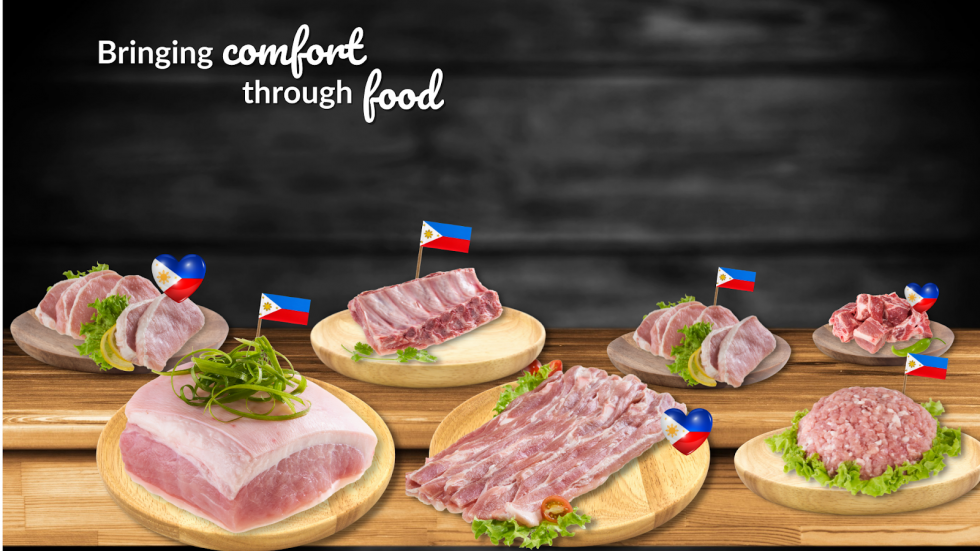
The Five Benefits of Locally Produced Fresh Meat
The Philippines is a meat-loving country.
In fact, 2020 statistics showed that every Filipino consumed an average of 13.74 kilograms of meat poultry. Fitch Solutions, a think tank, also mentioned that Filipinos are likely to spend more than ⅓ of the household budget to buy more meat and poultry products while cutting back on rice consumption by 2025.
With these numbers, meat dishes will undoubtedly reign over our tables in decades!
To receive high-quality meat, supporting local producers is a huge factor. Below are the reasons why.
Locally Produced Meat is Likely to be Healthier, Tastier, and Safer
Knowing where your meat comes from and how it was raised leads to a safer and healthier lifestyle. You’ll be familiar with your local farmers and their practices to ensure that livestock is free from preservatives, chemicals, added hormones, and antibiotics.
When livestock is free from unhealthy diets, they do not produce too much fat. Instead, they form beautiful marbling — white flecks of fat between meat muscles, attributing to its tenderness, juiciness, and great flavor.
Budget-Friendly
When you purchase local meat, you save shipping costs whether it comes across or from other countries. You also avoid a series of retailers or wholesalers from its sourcethus, giving you the best price.
Aside from that, local meat stores are primarily available within your community and online. Walk around and pick your favorite cuts or order through mobile, and they’ll deliver it straight to your doorstep.
You Can Support Local Farmers and the Future of Farming
Once you buy from local meat stores, you boost the business of our local farmers. You are helping them grow their profit and expand their business — improve their processes, invest in equipment/ facilities, and build skills to deliver premium meat.
Supporting local farmers also creates opportunities/ local jobs such as the farmers themselves, logistics who bring goods to the market, and teams who set up stalls and sell the products.
With higher meat demand, we establish a greener future for farming. Farming and relevant jobs will bloom, and younger generations will continuously explore this field. This phenomenon can also foster food security in the country – nutritious, sustainable, affordable, and accessible meat produce.
You are Helping the Environment
Purchasing local meat has an enormous impact on our environment.
It reduces food miles or the distance food travels before reaching your local market. Meat doesn’t need long truck trips or travel via planes. There’s no need for substantial storage facilities or refrigerators before reaching your plate. Thus, decreasing energy usage and carbon footprints.
Generally, we massively reduce our greenhouse gas emissions if we buy local meat produce.
Local Meat Supplier in Metro Manila
Local meat suppliers have plenty of benefits to our community.
If you’re looking for a local meat shop in Metro Manila, meet The Good Meat. The Good Meat is a local online meat shop offering pre-packed meat cuts such as pork, chicken, and beef.
The Good Meat products came from local farmers to preserve their natural properties and provide high-quality meat you deserve.
Visit The Good Meat website to know more about its products.
Frequently Asked Questions
Q1: If every Filipino household shifted entirely to locally sourced meat, what ripple effects would that create across the economy, environment, and food security?
The impact would be substantial and interlocking. Local farmers would gain sustained income, enabling investment in better equipment, facilities, and skills — improving product quality over time. Logistics and retail jobs within communities would expand. Carbon emissions tied to long-distance meat transport would decrease significantly, reducing the country’s food miles and energy consumption. Most critically, greater local production capacity would build food security — ensuring that nutritious, affordable meat remains accessible regardless of global supply chain disruptions that have exposed the vulnerability of import-dependent food systems.
Q2: How does the connection between livestock diet and meat marbling challenge the common assumption that higher price always signals better quality?
When livestock are raised without added hormones, antibiotics, or unhealthy feed, they develop naturally distributed fat — the white flecks between muscle known as marbling. This marbling is what delivers tenderness, juiciness, and depth of flavor in cooked meat. Locally raised animals, managed by farmers whose practices consumers can verify, are more likely to achieve this quality organically. Imported or commercially processed meat may command a premium price while delivering inferior marbling — meaning locally produced fresh meat can offer superior flavor and safety at a more competitive cost.
Q3: Why does reducing food miles matter specifically in the Philippine context, and how does geography amplify the environmental cost of imported meat?
As an archipelago reliant on inter-island and international shipping, the Philippines faces above-average food mile costs. Imported meat travels thousands of kilometers by sea or air, requiring substantial refrigeration infrastructure, fuel, and packaging to arrive in acceptable condition. Each step in that chain adds energy consumption and carbon emissions. By purchasing locally produced meat — which bypasses long-haul transport entirely — Filipino consumers directly reduce the environmental burden associated with their food choices. In a country already vulnerable to climate-related risks, this is not merely an ecological preference but a practical form of environmental responsibility.
Q4: At a time when younger Filipinos are gravitating toward urban careers, how does growing demand for local meat create a compelling case for a new generation to consider farming as a viable livelihood?
High and growing meat consumption creates stable, long-term demand for local producers — the economic foundation that makes farming a sustainable career rather than a last resort. When local meat suppliers thrive, they invest in modern facilities and processes that make farming more efficient and less physically grueling. The supply chain also creates adjacent opportunities in logistics, quality control, retail, and digital commerce that appeal to tech-savvy younger workers. A robust local meat industry does not just preserve traditional farming — it actively creates the conditions for a new generation to reimagine it.
Q5: How does buying from a local online meat shop fundamentally change the relationship between Filipino consumers and the source of their food?
Traditional grocery shopping places several layers of intermediaries between the consumer and the farm — wholesalers, distributors, supermarket buyers — each adding markup and reducing transparency. Purchasing directly from a local online meat supplier collapses this chain. Consumers gain access to fresher product, better pricing, and the ability to know specifically where their meat originated and how it was raised. This proximity creates accountability: local suppliers have reputational stakes in their community that large-scale distributors do not. The transaction becomes less anonymous and more like a relationship — one where quality and trust are maintained from farm to doorstep.
Related Stories
How to Raise Hogs from Farm to Table: A Guide for Commercial Hog Farmers
When it comes to commercial hog farming, meticulous planning is essential to ensure you have

Egg Production: Pilmico receives 500 Egg Club Award, first in Asia
Pilmico Animal Nutrition Corporation (Pilmico), part of the agribusiness subsidiary of the Aboitiz Group, makes
Top Filipino Holiday Season Foods
Known as one of the happiest places on earth, the Philippines is well-known for extravagant