
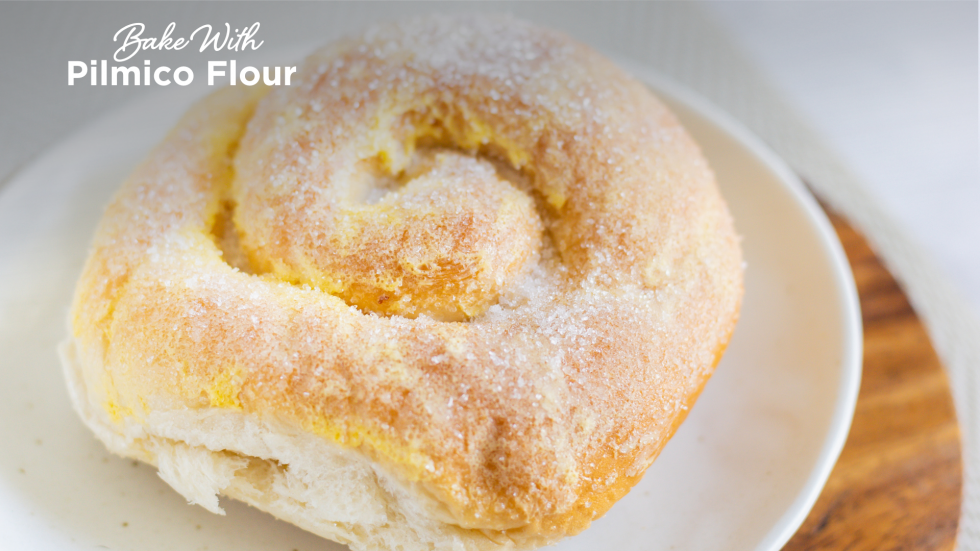
Bake with Pilmico Flour: Soft Ensaymada
How do strong hands make the softest bread? We’ll show you! Here’s a flexible panaderia classic recipe, perfect for breakfast, merienda, or dessert! #ProudToBePanadHero
INGREDIENTS:
100g, Sun Moon Star Hard Wheat Flour
60g, Wooden Spoon Cake Flour
4g, Instant Yeast
2g, Salt
36g, Sugar
8g, Full-cream Milk Powder
40g, Butter
1 piece, Egg yolk (medium)
100g, Water
PROCEDURE:
1. Place the instant yeast in the bowl, followed by Sun Moon Star Hard Wheat Flour and Wooden Spoon Cake Flour, then the salt, sugar, and full-cream milk powder.
2. Attach the hook to the mixer. note: secure the bowl unto the mixer.
3. Run the mixer at speed 1 for 30 seconds. then slowly pour in the water, and egg yolks.
4. When all the dry ingredients are fully wet, turn off the mixer. Scrape the side if needed.
5. Add the butter to the dough.
6. Run the mixer until fully developed.
7. Rest the dough for 10 mins on your work table, covered by the bowl.
8. After resting, roll the dough into a log.
9. Cut the dough pieces to +/-55 grams.
10. Round into dough balls, and rest for 20 mins.
11. Apply some butter on to your hands, turn a dough ball upside down. Apply enough butter to the dough with your fingers, while massaging the dough sideways. Continue until the dough is a thin rectangle. Roll into a log from up-side towards you, and roll a bit longer.
12. Form the log into a spiral, with the tail-end hidden beneath the clump of dough. And place them in ensaymada llaneras.
13. Let rise for 45 minutes, or check with indentation test.
14. Bake at 180°C, until light brown.
15. Cool.
16. Brush some butter on top, dip in sugar, and grate some cheese on top.
Frequently Asked Questions
Q1. Why does this ensaymada recipe use two different types of flour instead of just one?
The recipe combines Sun Moon Star Hard Wheat Flour and Wooden Spoon Cake Flour, and the blend is purposeful. Hard wheat flour provides the protein and gluten strength needed to give the dough structure and the elasticity required for the signature hand-stretching technique. Cake flour, being lower in protein, counters this with a finer, more tender crumb. Together they achieve the balance ensaymada demands – strong enough to hold its spiral shape, yet soft enough to deliver a pillowy, melt-in-the-mouth texture after baking.
Q2. What makes the shaping technique in this recipe particularly important?
The hand-stretching step is central to what makes ensaymada distinctively soft. After resting, each dough ball is flipped, buttered, and massaged outward using buttered hands until it forms a thin rectangle – then rolled into a log and coiled into a spiral with the tail end tucked underneath. This lamination of butter into the dough during shaping adds layers of fat that separate during baking, contributing to the characteristic flaky-yet-soft interior that sets a well-made ensaymada apart from a simple sweet roll.
Q3. Why must the dough rest at multiple stages throughout the process?
Three distinct rests are built into this recipe, and each serves a different function. The 10-minute bench rest after initial mixing relaxes the gluten network so the dough is easier to handle and shape without springing back. The 20-minute rest after rounding into balls allows the gluten to relax further before the delicate hand-stretching step. The 45-minute final proof allows the yeast to produce gas, giving the ensaymada its rise and lightness. Skipping any rest compresses these benefits and produces tighter, denser results.
Q4. What is the correct way to tell when the ensaymada dough has proofed enough before baking?
The indentation test is the reliable method. Press a finger gently about 1 to 2 centimeters into the proofed dough in the llanera. If the indent springs back slowly and only partially fills in, the dough is ready to bake – the yeast has done its work and the gluten structure is relaxed enough to expand in the oven. If it springs back quickly and completely, more proofing time is needed. If it does not spring back at all, the dough is over-proofed and may collapse during baking.
Q5. What are the key takeaways from this recipe for bakers attempting ensaymada at home?
Four things matter most. First, the dual-flour blend is not interchangeable – each flour plays a specific structural role. Second, the order of mixing is intentional: liquids and dry ingredients are combined before butter is added, protecting gluten development. Third, buttered hands during shaping are not optional – they are the mechanism by which fat is laminated into the dough for that signature softness. Fourth, the finishing layer of butter, sugar, and grated cheese applied after baking and cooling is what transforms a good bun into a true ensaymada.
Related Stories
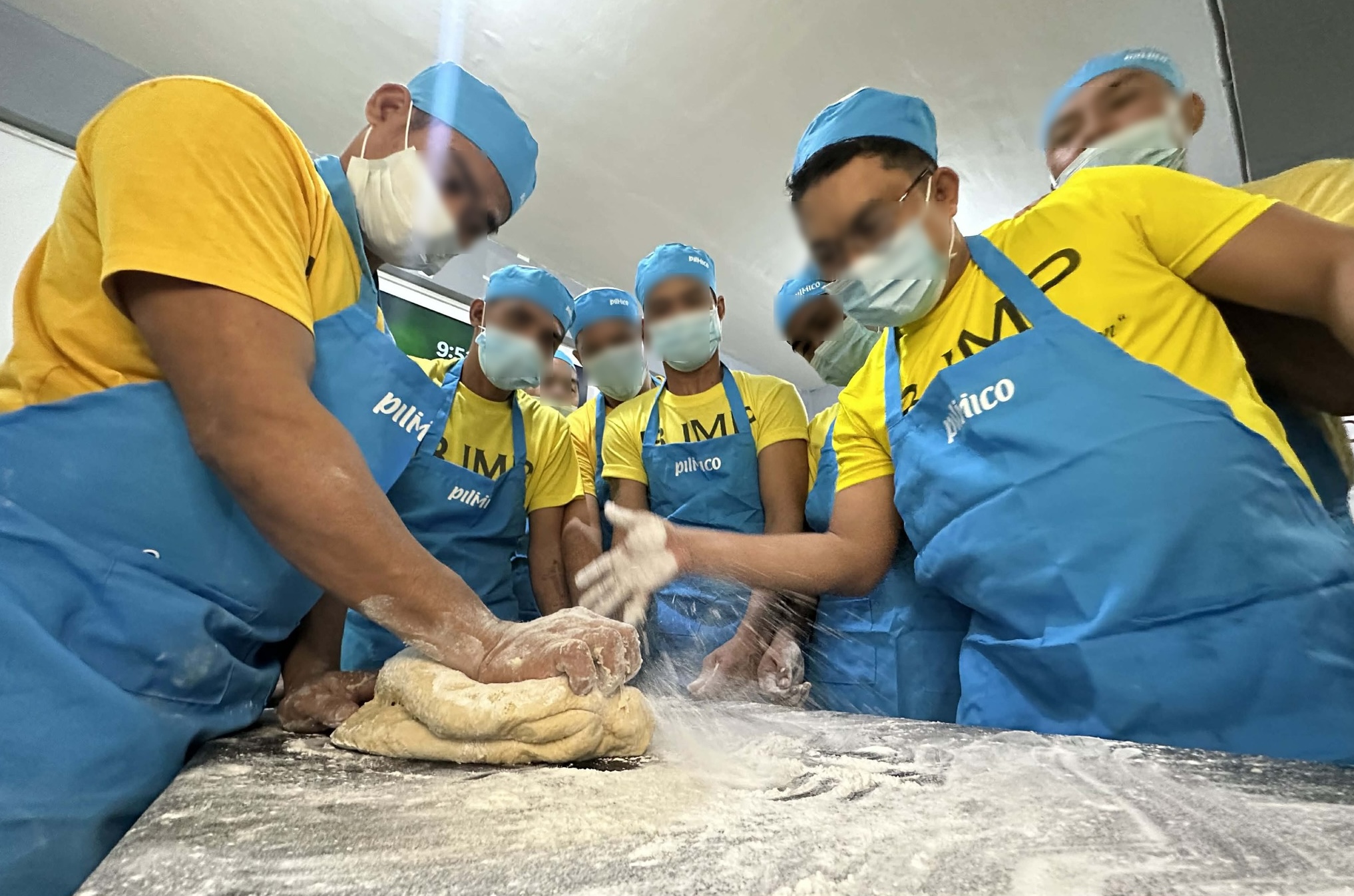
Breaking Bread, Building Opportunities: Pilmico provides baking skills training to Iligan PDLs
ILIGAN CITY, Lanao Del Norte — In Iligan City Jail, a three-day baking training is
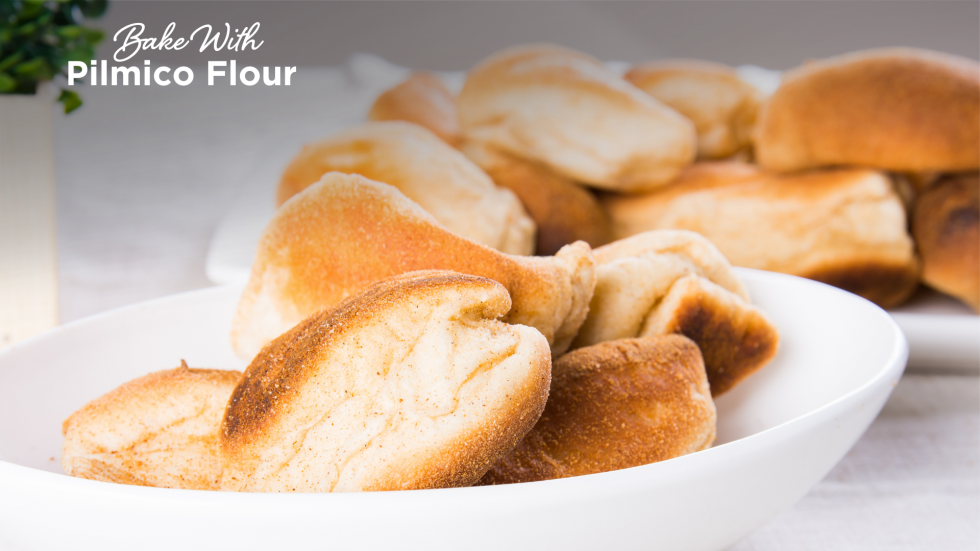
Bake with Pilmico Flour: Kutitap Pandesal
Start your mornings right with an all-time panaderia favorite: Pan De Sal! Baked proudly by
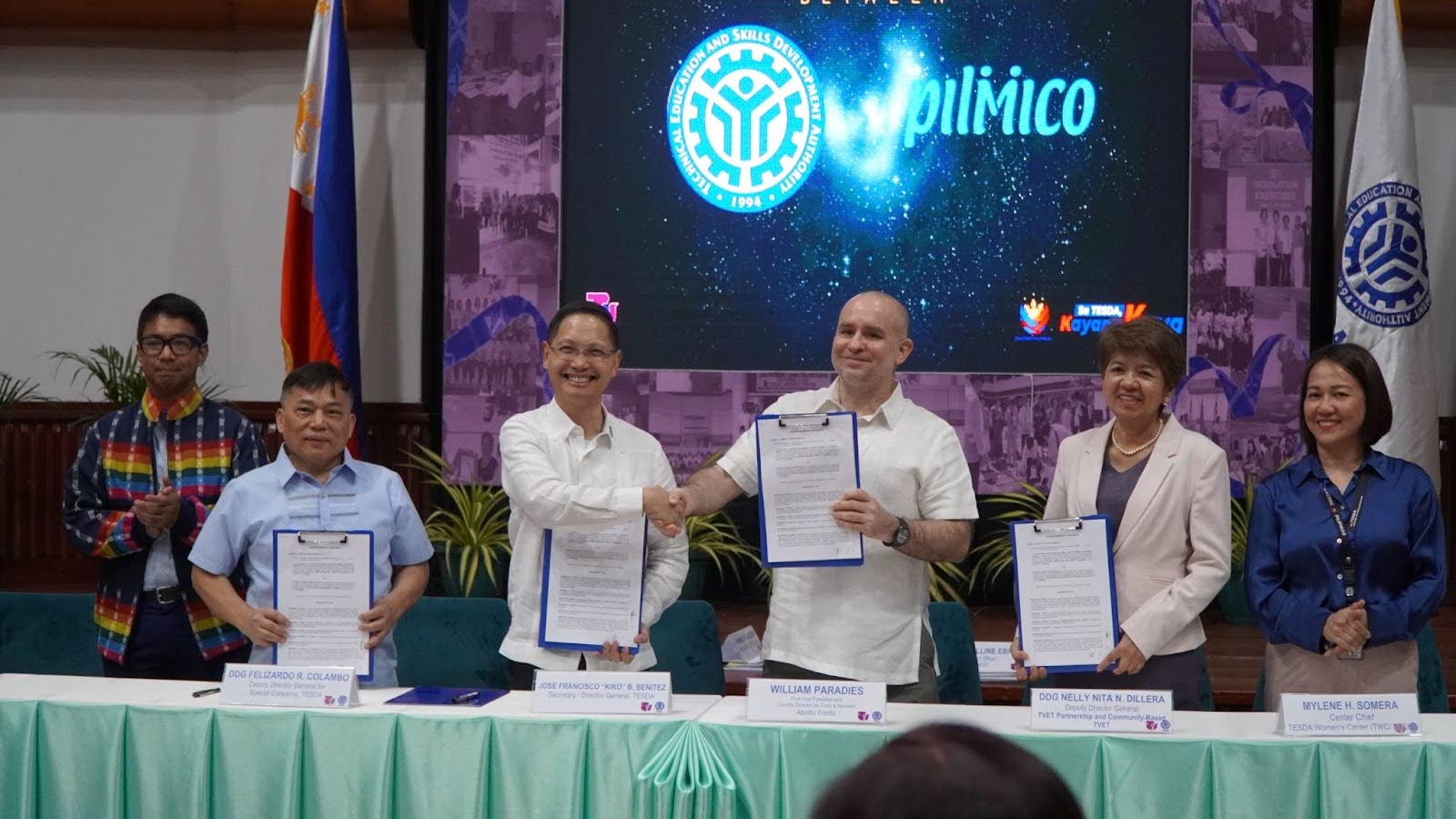
Pilmico and TESDA Renew Partnership to Upskill Local Bakers and Trainers
Apr 2, 2025, Manila, Philippines – Pilmico Foods Corporation (Pilmico), an Aboitiz Foods Company, and