
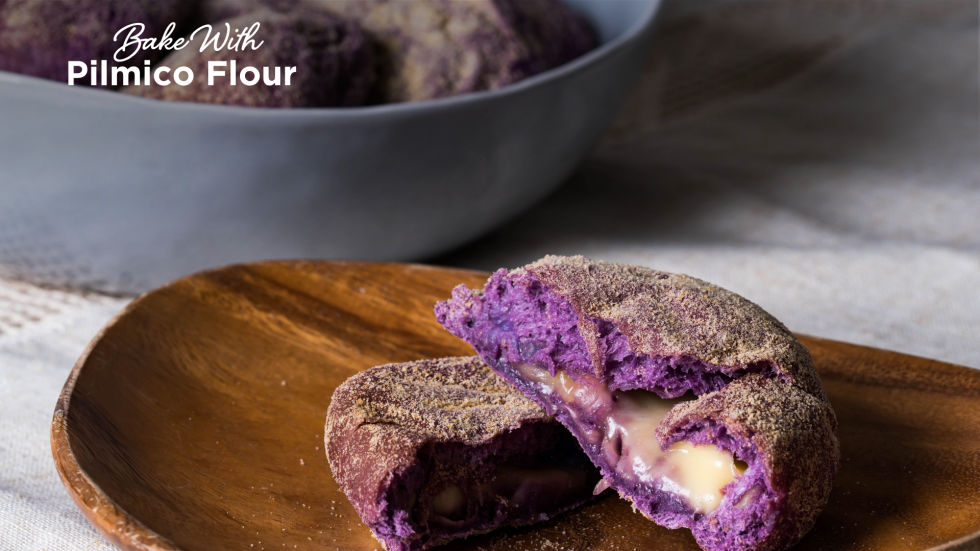
Bake with Pilmico Flour: Ube Cheese Pandesal
It’s been a year of craving… Do you know how to bake your own Ube Cheese Pan de Sal at home? Here’s how!
INGREDIENTS:
400g Sun Moon Star Bread Flour
6g Instant Yeast
4g Salt
80g Sugar
20g Full Cream Powdered Milk
80g Ube Powder
240g Water
40g Butter/Margarine
PROCEDURE:
1. Place the instant yeast in a bowl, followed by the flour, then the salt, sugar, and other dry ingredients.
2. Attach a dough hook to the mixer. Secure the bowl unto the mixer.
3. Run the mixer at speed 1 for 30 seconds, then slowly pour in the water.
4. When all the dry ingredients are fully wet, turn off the mixer.
5. Add in the butter/margarine onto the dough.
6. Run the mixer at speed 4 to 5, or medium speed for 5 minutes.
7. Turn off the mixer to scrape dough pieces and stick them onto the lump of dough.
8. Run the mixer for another 5 to 10 minutes, or until the dough has been developed.
9. Rest the dough for 10 minutes on your work table, covered by a bowl.
10. After resting, cut the dough pieces to +/-30 grams.
11. Round to dough balls. Rest for 15 mins.
12. Flatten the ball and put enough ube halaya, and cheese cube in the middle, and seal.
13. Roll in breadcrumbs, and set on greased pans.
14. Let rise for 30 to 40 minutes, or check with indentation test.
15. Bake at 180°C, until golden brown, or until underside shows a browned circle (swelo).
Frequently Asked Questions
Q1. What makes Ube Cheese Pandesal different from classic pandesal?
Ube Cheese Pandesal is a filled, flavored twist on the traditional Filipino bread roll. The dough itself is enriched with ube powder, giving it a distinctive purple color and earthy-sweet flavor throughout. Each piece is also individually stuffed with ube halaya and a cheese cube before sealing, creating a layered filling that melts into a sweet-savory combination during baking. This contrast between the ube-flavored dough and the gooey cheese center is what sets it apart from a plain pandesal.
Q2. Why is ube powder incorporated into the dough rather than just used as a filling?
Mixing ube powder directly into the dry ingredients at the start of the process distributes the ube flavor and color evenly throughout the dough rather than concentrating it only in the center. This ensures every bite – not just the filling – carries the characteristic purple hue and subtle ube taste. It also means the dough itself contributes to the overall flavor profile, so the bread remains flavorful even in portions where the filling may not reach.
Q3. What is the purpose of the two separate resting stages before baking?
The 10-minute bench rest after initial mixing allows the gluten to relax after the intensive mixing phase, making the dough more pliable and easier to portion and shape without tearing. The second 15-minute rest after rounding into balls further relaxes the gluten before the dough is flattened for filling. Without these rests, the dough would spring back elastically when pressed, making it difficult to flatten evenly and increasing the risk of the filling breaking through the sealed edges during proofing and baking.
Q4. How do you know when the filled rolls are properly proofed and ready to bake?
The indentation test provides the most reliable guide. Press a finger gently into the side of a proofed roll – if the dent springs back slowly and partially, the roll is ready. A quick, full spring-back means more proofing time is needed. The recipe also offers two baking doneness cues: a golden brown top surface, and the appearance of a browned circle on the underside of each roll – known as swelo – which confirms that sufficient heat has penetrated through the base of the bread.
Q5. What are the key takeaways for anyone baking Ube Cheese Pandesal at home?
Three principles make the difference between good and great results. First, all dry ingredients including the ube powder must go in before any liquid, ensuring even distribution before gluten begins to develop. Second, butter is added after the initial wet mixing – adding it too early coats the flour and inhibits gluten formation. Third, sealing the filling properly before rolling in breadcrumbs is critical – any gaps in the seal allow the cheese to leak out during baking, compromising both presentation and texture.
Related Stories
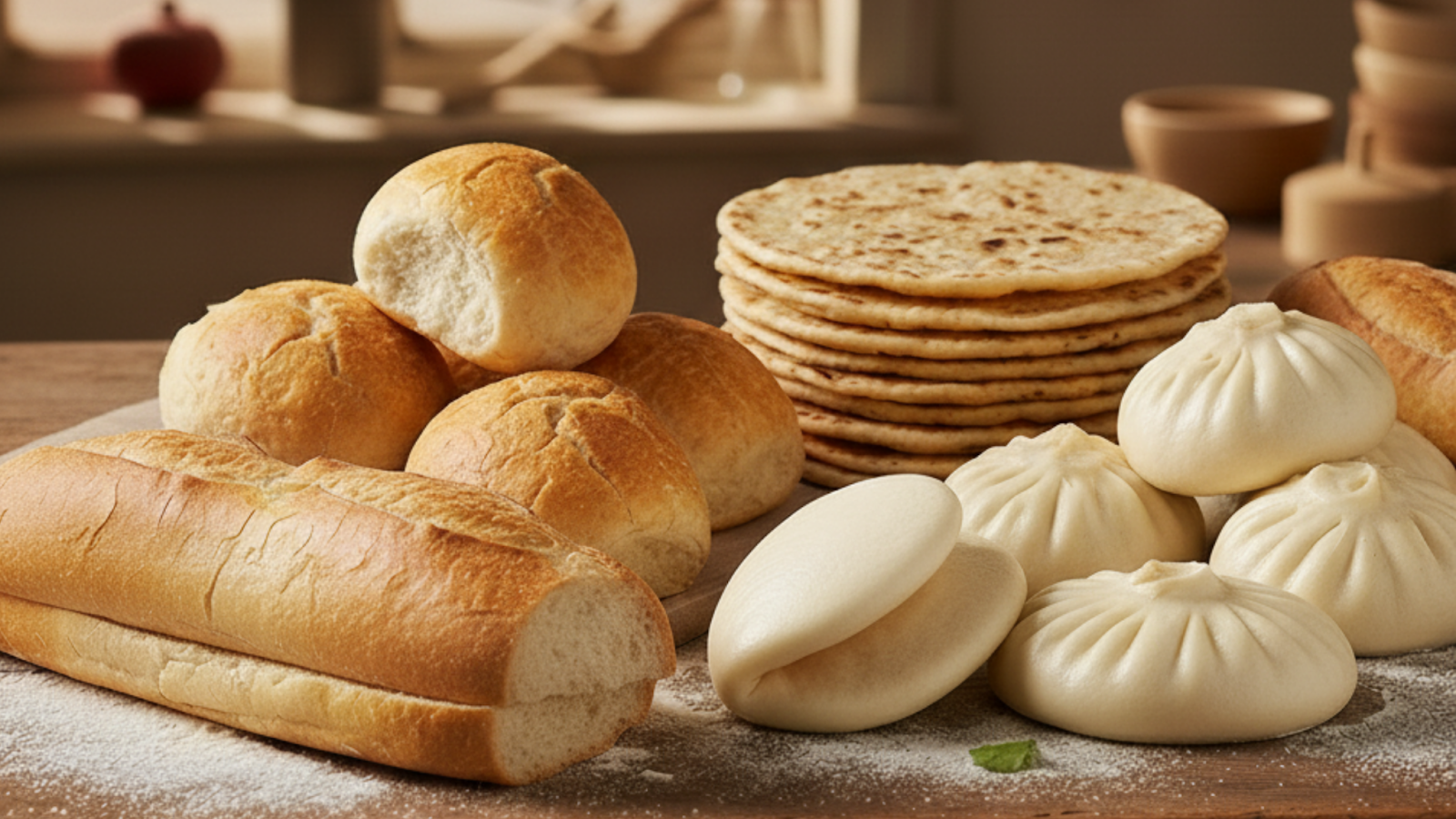
Breads That Bring Us Together: Celebrating World Bread Day Across Asia Pacific
Bread may be simple–just flour and a few ingredients–yet it holds so much meaning. Across

Baking with chocolate
Chocolate, although versatile and can be used in different recipes, is a tricky ingredient considering
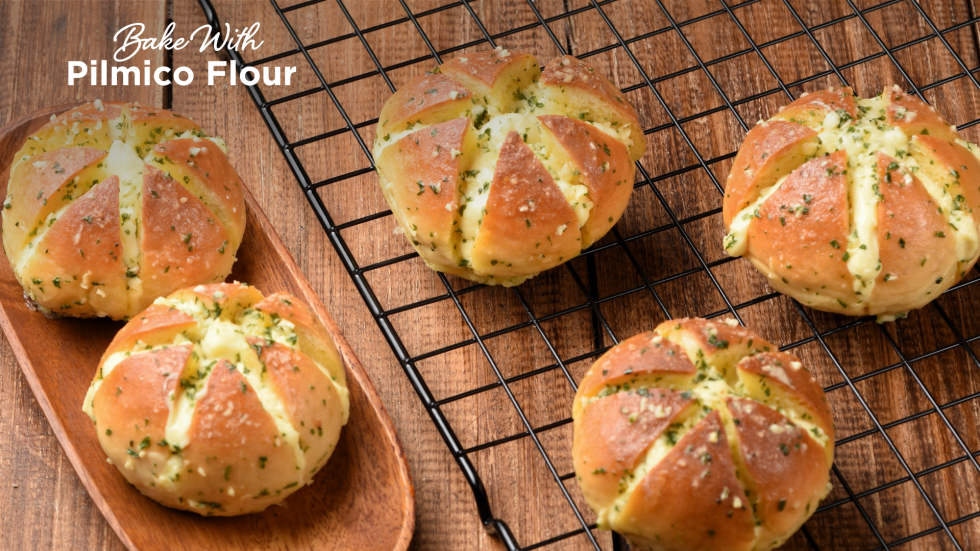
The Perfect K-Drama Snack: Korean Garlic Bread Recipe
The Perfect K-Drama Snack: Korean Garlic Bread Recipe Ready to binge on Korean dramas this