
Feeding Your Rabbits: Insights Into Rabbit Feeds
When it comes to raising rabbits for commercial purposes, ensuring their dietary needs are met is crucial for their health and productivity. It’s hard to think about what rabbits eat exactly, but just like any other livestock, rabbits require a balanced and nutritious diet to thrive. This comprehensive guide delves into the world of rabbit feeding, providing valuable insights for rabbit farmers. From the foundational role of hay to the benefits of pellets, the inclusion of fresh greens, and the importance of specialty feeds, this guide covers it all to keep your commercial rabbitry in top form.
Hay—The Foundation of Rabbit Diets
Hay plays a vital role in rabbit breeding, serving as the cornerstone of commercial rabbit nutrition. High in fiber, hay not only supports healthy digestion, but also promotes proper dental health by encouraging natural chewing behaviors. Different types of hay offer various advantages. For instance, Timothy hay aids digestion, while alfalfa hay, richer in calcium, is suitable for younger rabbits. Maintaining the right balance is key; portions should match the size of the rabbits, with frequent access to hay encouraging natural grazing behaviors and preventing obesity.
Fresh Greens—Enriching the Diet
In considering what to feed rabbits, fresh greens are a valuable addition to the commercial rabbit diet. They provide essential vitamins, minerals, and hydration, contributing to overall health and well-being. Rabbit farmers can offer a range of greens, including leafy vegetables like kale, spinach, and arugula, as well as vegetables like bell peppers, carrots, and herbs such as cilantro and parsley. Moderation and variety are key when introducing new greens. Gradual adjustments help rabbits adapt to different flavors, ensuring a balanced diet.
Pellets—Essential Nutrient Sources
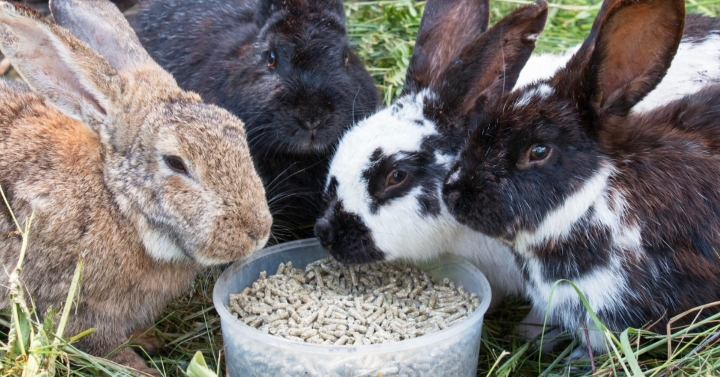
Within each pellet, a treasure trove of essential vitamins, minerals, and proteins awaits your rabbits. These micronutrients are not only vital for their day-to-day sustenance, but also play a pivotal role in supporting their growth, reproduction, and overall health. In essence, rabbit pellets are akin to nature’s multivitamin, tailor-made to cater to your furry charges.
However, not all pellets are created equal. When it comes to selecting the right rabbit food for your commercial rabbitry, discernment is key. Opt for high-quality rabbit pellets that are expressly formulated to cater to the specific life stage of your rabbits. This tailored approach ensures that your rabbits receive the precise balance of nutrients they need at every developmental milestone.
As a savvy rabbit farmer, it’s imperative to scrutinize the ingredients list. Quality pellets should steer clear of artificial additives and fillers that do little to bolster your rabbits’ well-being. Instead, focus on pellets that boast natural and wholesome ingredients, ones that align with your commitment to nurturing healthy and productive rabbits.
Water—Hydration Matters
Water isn’t a luxury for rabbits; it’s an absolute necessity. Adequate water intake is the linchpin of their well-being and overall productivity. As a responsible rabbit farmer, your commitment to providing this essential element can make a significant difference in your rabbitry’s success.
Each rabbit should consume a minimum of 50-150 milliliters of water per kilogram of body weight daily. This rule serves as a valuable guideline to gauge your rabbits’ hydration needs. Keep a watchful eye on their water consumption, as it’s an indicator of their health and the environmental conditions they are exposed to.
To ensure that your rabbits remain well-hydrated, it’s imperative to offer water in sturdy and tip-proof containers. Rabbits can be curious creatures, and their inquisitiveness might lead to spillage or contamination of their water source. By using durable containers, you can minimize water wastage and maintain a clean supply.
Daily checks and refills are a non-negotiable routine, especially during warm weather when water can evaporate more rapidly. The scorching sun and high temperatures can cause rabbits to become dehydrated quickly, posing significant risks to their health. By proactively monitoring and replenishing their water containers, you are safeguarding their well-being and ensuring they remain content and productive.
Specialty Feeds—Addressing Specific Needs
Just like humans, rabbits have unique dietary requirements at different life stages, and this is where specialty feeds come into play. Consider rabbit food products like Pilmico’s Kunemax, a rabbit feed designed to cover every growth phase, from breeders to growers. Kunemax offers comprehensive nutritional support, promoting better gut health, immunity, faster growth, optimal production, and effective odor control. It’s essential to consider specialty feeds when rabbits have specific nutritional requirements based on their life stage, ensuring their health and productivity.
Nurturing Your Rabbit’s Health Through Nutrition
As a commercial rabbit farmer, a well-balanced diet isn’t merely a choice; it’s a crucial factor for your rabbits’ vitality and productivity. While this guide has covered the essentials, remember that every rabbit is unique. Consulting with a veterinarian is key to creating a personalized feeding plan that caters to your rabbits’ specific needs. As you provide hay, fresh greens, pellets, and specialty feeds, envision your rabbits thriving, their health and productivity soaring, and your commercial rabbitry prospering. Here’s to healthy and productive hoppers and successful rabbit farming!
Sources:
- Rabbit Production, Pennstate Extension
- The Guide to Raising and Breeding Rabbits for Meat, Mother Earth
Frequently Asked Questions
Q1: What are the five core dietary components every commercial rabbit farmer should provide?
A complete commercial rabbit diet rests on five pillars: hay as the fiber-rich foundation, fresh greens for vitamins and hydration, pellets as a concentrated nutrient source, clean water for hydration, and specialty feeds tailored to specific life stages. No single component is sufficient on its own — each plays a distinct role in supporting digestion, immune function, growth, and reproduction. Balancing all five consistently is what separates productive, healthy rabbitries from operations that struggle with poor animal performance and elevated health costs.
Q2: Why is hay considered the most critical element of a rabbit’s diet?
Hay’s importance stems from two biological needs rabbits share: a digestive system that requires continuous high-fiber intake to function properly, and teeth that grow continuously and need mechanical wear from chewing. Without adequate hay, rabbits are prone to gastrointestinal stasis — a potentially fatal slowdown of gut motility — and dental overgrowth. Timothy hay suits most adult rabbits due to its digestive benefits, while alfalfa hay, being calcium-rich, is better suited to younger growing rabbits. Portions should match rabbit size, with unrestricted access encouraged to support natural grazing behavior.
Q3: What should rabbit farmers look for when selecting commercial pellets?
Pellet quality varies significantly, so selection criteria matter. Prioritize pellets formulated for the specific life stage of your animals — growers, breeders, and does in kindle have different nutritional demands that a single generic formulation cannot adequately address. Scrutinize the ingredients list and avoid products containing artificial additives or low-value fillers, which bulk out the product without delivering nutritional benefit. High-quality pellets should list natural, wholesome ingredients and provide a complete profile of vitamins, minerals, and protein to support daily function, growth, and reproductive performance.
Q4: How much water do rabbits need daily, and how should it be managed on a commercial farm?
Each rabbit requires between 50 and 150 milliliters of water per kilogram of body weight daily, though actual consumption rises considerably during hot weather when dehydration risk increases. Water containers should be sturdy and tip-proof to prevent spillage and contamination — two common causes of inadequate hydration in commercial setups. Daily checks and refills are essential, not optional. Monitoring water consumption also serves as an early health indicator; a sudden drop in intake often signals illness or environmental stress before other symptoms become apparent.
Q5: When do specialty feeds become necessary, and what benefits do they offer?
Specialty feeds address nutritional gaps that standard hay, greens, and pellets cannot fully cover during demanding physiological stages — particularly for breeding does, lactating females, and rapidly growing kits. These formulations are engineered to support gut health, strengthen immunity, accelerate growth rates, and optimize reproductive output in ways that general-purpose feeds cannot match. They also help manage practical farm concerns like odor control in enclosed housing. Consulting a veterinarian before introducing specialty feeds ensures the product selected aligns with the specific life stage and health status of your animals.
Related Stories
Unlocking the Health Benefits of Rabbit Meat: A Nutrient-Rich Alternative
In a world where dietary choices are increasingly scrutinized, many are seeking healthier and sustainable

The Filipino Way of Celebrating
Filipinos love celebrating occasions from the smallest to the largest of reasons. From anniversaries and

From Recovery to Resilience: Pilmico’s Livelihood Kits continue to uplift Iloilo
Sta. Barbara, Iloilo—In a move to empower communities through sustainable livelihoods, Pilmico Foods Corporation (Pilmico),