
Breaking Bread, Building Opportunities: Pilmico provides baking skills training to Iligan PDLs
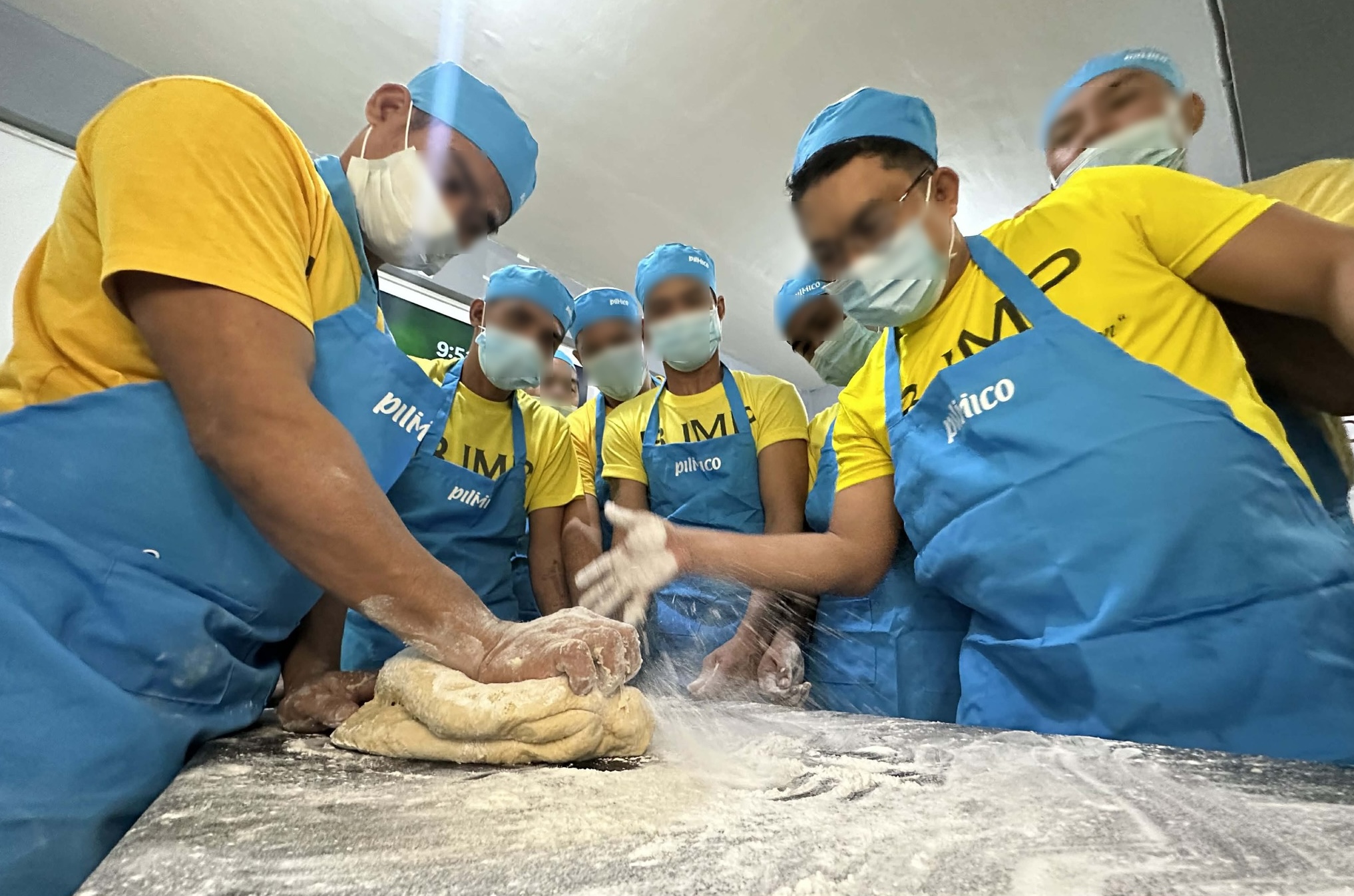
ILIGAN CITY, Lanao Del Norte — In Iligan City Jail, a three-day baking training is opening new pathways for persons deprived of liberty (PDLs), equipping them with practical skills and a renewed sense of purpose as they prepare for life beyond detention.
Bringing the core value of responsibility to life, Aboitiz Foods’ subsidiary Pilmico Foods Corporation (Pilmico) partnered with the Mindanao State University-Iligan Institute of Technology (MSU-IIT) and the Bureau of Jail Management and Penology (BJMP) Iligan for the Baking Behind Bars program.
An initiative of MSU-IIT’s WE CARE Office, the program aims to equip PDLs with sustainable livelihood skills, ensuring they have the tools to become productive members of society upon their reintegration.
Thirty-seven PDLs—including 24 men and 13 women—participated in the intensive technical and hands-on training in bread and pastry production from March 12 to 14, 2026, at the BJMP Iligan baking facility.
Nourishing potentials behind walls
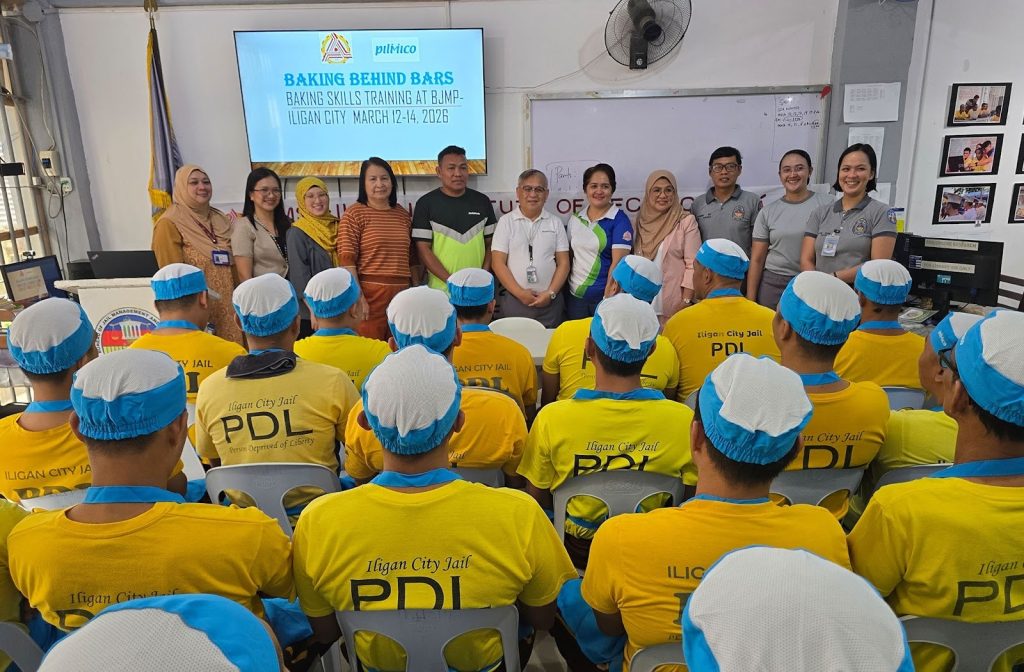
For many living behind bars, social stigma often creates a wall taller than any prison fence, blocking the path to a productive life. However, by providing the necessary tools to nurture their potential, PDLs get more than just a second chance, but a bridge towards personal growth and change.
Pilmico views the Baking Behind Bars program as an extension of its commitment to community empowerment. Through expert-led workshops and the provision of high-quality flour, the partnership transforms correctional facilities into spaces of rehabilitation and personal development.
Guiding the participants throughout the training, Quality Assurance Supervisor for Flour Operations Rodulfo Orong shared the deeper mission behind the sessions.
“The Baking Behind Bars program is aligned with Aboitiz Foods’ commitment to creating shared value with the communities where it operates, including the marginalized communities. Enabling PDLs to access skills training will help them build a sustainable source of livelihood,” said Orong, adding, “It was a great and meaningful experience. More than the technical lessons and skills, we hope this initiative will open more opportunities for PDLs to have a fresh start with renewed hope.”
Kneading a path to reintegration
The three-day workshop introduced participants to the fundamentals of bread making, including flour characteristics, ingredient functionality, and costing—essential knowledge for starting a bakery business.
Through the baking equipment and facility provided by the Department of Science and Technology (DoST), participants applied their learning to create products such as cheesy malunggay pandesal, cheesy onion pandesal, and oatmeal cookies, which recipes can be shared to their families.
As part of the program’s sustainability, MSU-IIT and BJMP also plan to launch the ‘Bread on Wheels’ project that will allow families of PDLs to sell these products outside the facility through mobile shops, turning skills into a tangible source of livelihood.
City Jail Warden JCINSP Carmelo A. Corsame underscored how multi-sectoral collaboration maximizes resources for social impact and amplifies the significance of the initiative.
“When our PDLs knead dough, they are also kneading their future. This is about dignity, second chances, and reconnecting with family and community,” said Corsame.
Bringing shared value to the margins
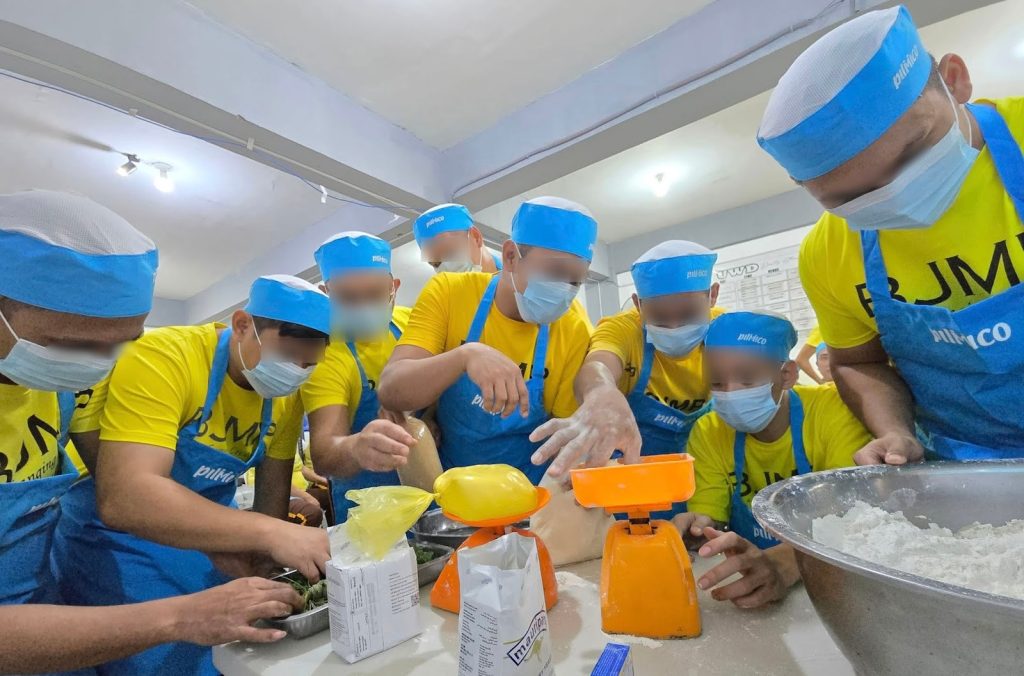
Through initiatives like the Baking Behind Bars program, PDLs are provided with tools that may help them pursue livelihood opportunities and reintegrate successfully into society. As the ovens cooled and the last loaves were shared, the bread was proof that even behind bars, hope can rise.
“I used to think my hands were only for mistakes. Now, I see they can create something my children might taste one day,” said Mark, one of the participants.
“This training gave us the chance to learn something new and useful. We are thankful for this opportunity,” shared one of the participants, reflecting the positive impact of the program.
Ultimately, Baking Behind Bars underscores a shared belief among partners: that meaningful change begins with access to knowledge, opportunities, and inclusive support systems that enable marginalized individuals to move forward.
Through initiatives like this, Aboitiz Foods, through Pilmico, continues to demonstrate that creating shared value means empowering individuals, strengthening communities, and forging partnerships to nourish a better future.
FAQs:
- What is the “Baking Behind Bars” program?
It is a collaborative skills-training initiative designed to provide Persons Deprived of Liberty (PDLs) at the Iligan City Jail with sustainable livelihood skills and a sense of purpose to prepare them for life after detention.
- Who are the key partners involved in this initiative?
The program is a partnership among Aboitiz Foods’ subsidiary Pilmico Foods Corporation,, Mindanao State University-Iligan Institute of Technology (MSU-IIT) through its WE CARE Office, and the Bureau of Jail Management and Penology (BJMP) Iligan.
- What specific support did Pilmico provide for this training?
Pilmico provided high-quality flour, specialized baking modules, and hands-on technical training for the workshops. They also donated surplus flour and supplies to the BJMP facility to serve as start-up materials for the jail’s internal bakery operations.
- What did the participants learn during the three-day workshop?
The 37 participants underwent intensive hands-on training in bread and pastry production. They mastered dough handling, ingredient functionality, and costing, producing specialized items like cheesy malunggay pandesal, cheesy onion pandesal, and oatmeal cookies.
- How does this program turn skills into a tangible livelihood?
Beyond the training, MSU and BJMP also plan to launch the “Bread on Wheels” project, which will enable the families of the PDLs to sell the baked products outside the facility through mobile shops. This aims to ensure that the skills learned behind bars provide a real source of income for their loved ones.
Related Stories

Baking with chocolate
Chocolate, although versatile and can be used in different recipes, is a tricky ingredient considering

Bake with Pilmico Flour: Ube Cheese Pandesal
It’s been a year of craving… Do you know how to bake your own Ube

Bake with Pilmico Flour: Soft Ensaymada
How do strong hands make the softest bread? We’ll show you! Here’s a flexible panaderia